
1. Introduction and Context
Holly McQuillan is a fashion designer, researcher and educator from New Zealand. A lecturer in the Fashion Design programme at Massey University’s Faculty of Creative Arts in Wellington, McQuillan combines design creativity with academic research and technological innovation in her practice.
Throughout her academic career, she has contributed significantly to the development of critical thinking on sustainable fashion. Together with Timo Rissanen, she co-authored Zero Waste Fashion Design (Bloomsbury, 2016), now considered a reference text in the field.
McQuillan’s vision goes beyond simply reducing waste. For her, fashion must be an open and inclusive system, capable of connecting technology with creativity, craftsmanship with materials science, and sustainability with aesthetics. Her work offers a concrete alternative to the linear ‘produce-consume-throw away’ model, moving instead towards circular design, where every element of the process has value and can be regenerated.
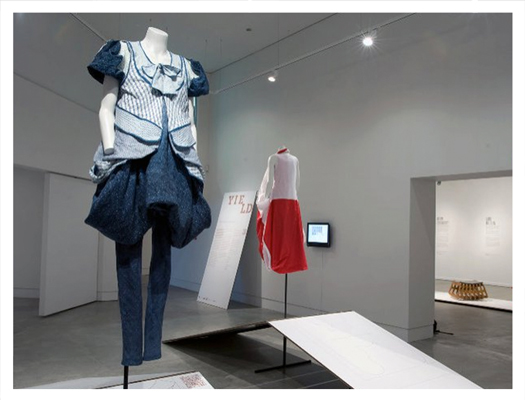
Image 1: Zero waste garment developed by Holly McQuillan retrieved from https://hollymcquillan.com/portfolio/wolf-sheep-2009/
1.1 Defining zero waste in McQuillan’s work
The concept of zero waste is not just a strategy to reduce environmental impact, but a genuine design methodology. Zero-waste design means eliminating waste from the conception stage, imagining garments in which every part of the fabric is used intentionally. For McQuillan, this condition is not a limitation, but a creative constraint: fertile ground for experimentation.
Zero waste design not only serves to avoid waste, but also becomes the generator of form itself, a device capable of transforming material limitations into aesthetic opportunities. McQuillan consciously accepts risk as an essential part of his method: he lets constraints, the width and length of the fabric, the structure of a typeface or even the silhouette of an animal guide the creation of the pattern and the final form. This experimental attitude makes his approach an example of how sustainability can become a driver of innovation, demonstrating that ‘zero waste’ does not mean sacrifice, but possibility.
2. Methods, Innovations, and Practice-Based Research
2.1 Zero-waste modelling techniques
Among Holly McQuillan’s most emblematic projects, ‘Make/Use’, developed between 2015 and 2016, represents a real revolution in the way we conceive clothing and the role of the user. Created in collaboration with other designers and academic institutions, the project is based on the idea that consumers can become an active part of the creation process.
The ‘Make/Use’ system provides open source patterns that anyone can download, print and create: an approach that embodies the principle of ‘design for participation’, where the creative process does not end with production but continues at the moment of use.
The garments are designed to completely eliminate fabric waste, but also to be modifiable and adaptable: people can change the shape, length or details according to their needs.
From a technical point of view, each model is constructed as a modular system: a single piece of fabric is folded, cut and sewn strategically to achieve complex three-dimensional shapes. In this way, McQuillan extends the narrative and durability of the garment, transforming the act of dressing into a collaborative gesture.
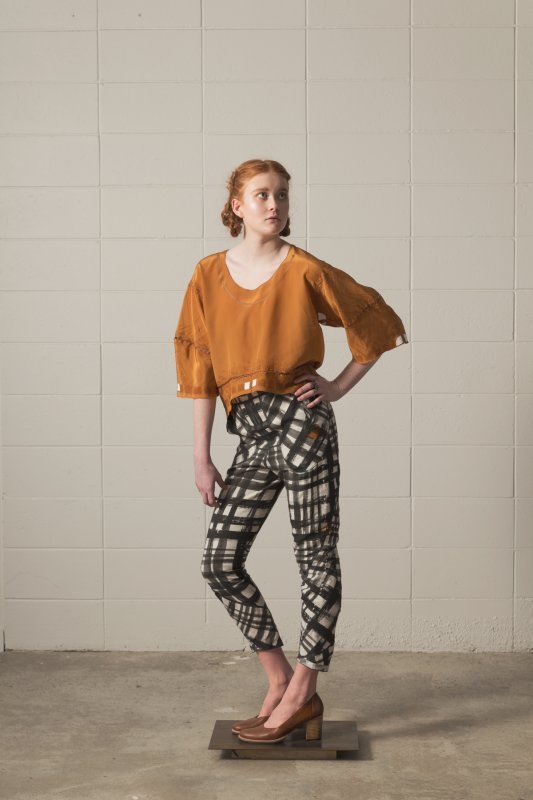
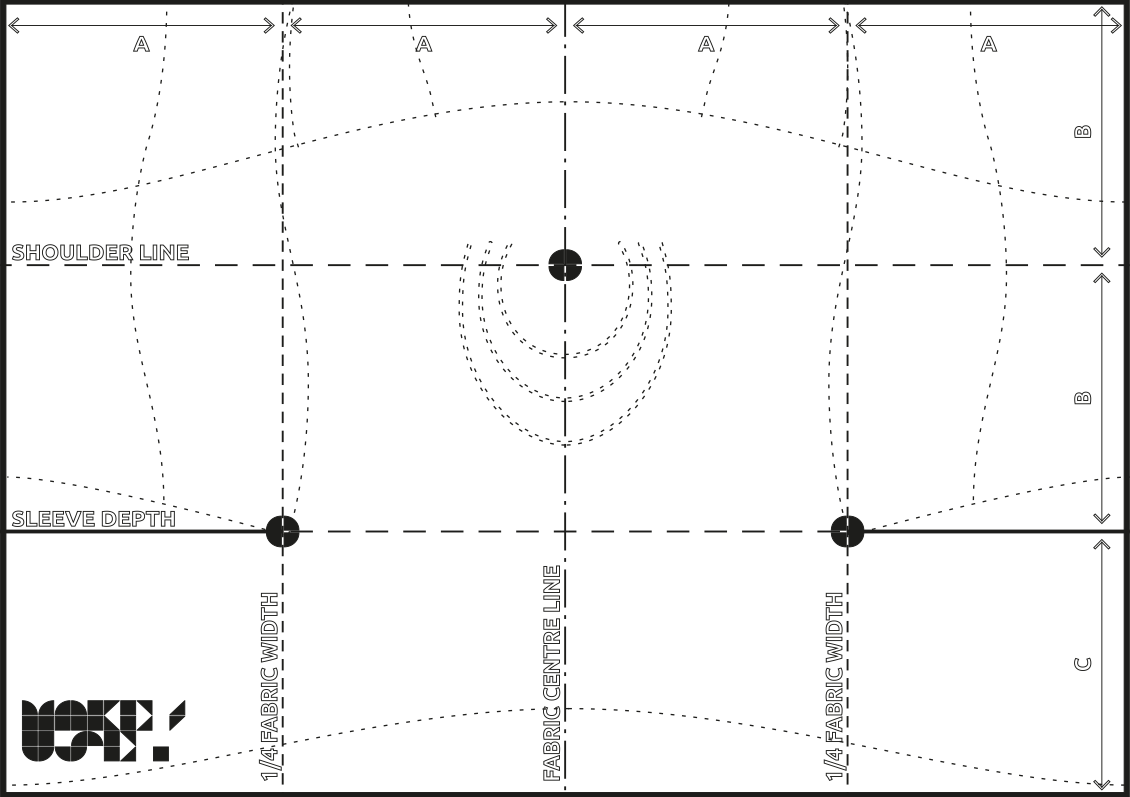
Image 2: Zero waste garment and pattern by Holly McQuillan retrieved from https://makeuse.nz/make/crop-t-shirt/
2.2 Flat to Form
The Make/Use project introduces a radically different approach to traditional clothing manufacturing processes. This method involves a change of perspective in the way the designer interprets the transition from flat pattern to body volume. Although it may seem complex, this paradigm shift is based on very simple principles.
One of the fundamentals of the system is the generation of volume through the connection of two edges of the fabric, which form a ‘tube’, a space through which the body can move. All the garments in the Make/Use project are derived from this logic: some, such as the skirt or tube dress, are based on a single tube, while others, such as T-shirts, coats or trousers, are created through the interaction of two or more tubes.
To fully understand these principles, it can be helpful to experiment with paper models, a practice reminiscent of the art of origami. This approach mirrors the working methods of Holly McQuillan, who uses paper models to quickly explore and develop new zero-waste design solutions.
2.3 Integration of digital and textile innovation
McQuillan integrates advanced use of digital prototyping tools, such as CLO3D, laser cutting and parametric design, into her zero-waste fashion design approach to simulate and optimise garments before physical production, minimising fabric waste and sampling stages. Her research experiments with the use of one-piece fabrics and shaped fabrics, designed to completely eliminate cutting waste through a design that is based on the logic of full surface utilisation. McQuillan also collaborates with textile technologists to develop materials designed in synergy with the construction of the garment: fabrics whose woven structures and geometric compositions follow the lines of the model, merging textile design and garment design into a single integrated and sustainable process.
2.4 Aesthetic and conceptual results
McQuillan’s work openly challenges the assumption that zero-waste design results in garments with rigid or inelegant silhouettes. Through in-depth research into pattern construction methods and the integral use of fabric, McQuillan demonstrates that sustainability can become a true aesthetic language. Her garments, often modular, sculptural and visually complex, not only eliminate material waste but reinterpret the very concept of form and volume in fashion.
3. Impact, Challenges, and Lessons for Designers
3.1 Impact on education and industry
The Make/Use initiative bridges the gap between academic research and public engagement, transforming fashion design into a participatory and shared process. This approach has influenced fashion curricula globally, inspiring courses in sustainable patternmaking and digital fashion. The dissemination of open source resources, including patterns, guides, and CLO3D simulations, allows designers, students, and enthusiasts to explore the possibilities of zero waste fashion design in a practical way, promoting a collaborative and responsible design culture.
3.2 Critical reflection and synthesis of best practices
McQuillan demonstrates that zero-waste design can be both aesthetic and sustainable, combining formal experimentation with environmental responsibility.
Her best practices are based on:
-
model-based innovation, where the construction of the garment and its shape are based on a geometric logic that eliminates waste;
-
digital integration that allows complex processes to be simulated, optimised and shared;
-
awareness of materials, which guides every design choice towards a more intelligent and regenerative use of resources;
-
open source collaboration, which opens up design to a collective dimension, transforming knowledge into a shared asset.
However, challenges remain, such as the difficulty of adopting these methods on a large industrial scale and the need for a more profound cultural change among consumers, who are still accustomed to the speed and convenience of fast fashion.
References
McQuillan, H. (n.d.). About. Holly McQuillan. https://hollymcquillan.com/about/
Make/Use. (n.d.). Make/Use. https://makeuse.nz/