
2. Context: Prato’s Textile Recycling Heritage
The Prato textile district is one of the oldest examples of the circular economy applied to the fashion industry. Since the 19th century, the area has developed a high level of specialisation in the recycling of wool and other textile fibres through the regenerated carded process, which transforms used clothing and production waste into new yarns.
This practice significantly reduces the consumption of water, energy and raw materials, offering a sustainable alternative to the production of virgin wool.
Rifò is a contemporary interpreter of this tradition, collaborating with local businesses, carders and artisans still active in recycling.
3. Design for Recyclability in Rifò Products
3.1 Material choices: regenerated fibres as building blocks
Rifò bases its production on the use of regenerated fibres, selected to guarantee quality, traceability and recyclability. The main materials include:
-
Regenerated wool, sourced from pre- and post-consumer knitwear;
-
Regenerated cashmere, obtained through mechanical recycling processes of carefully selected textile waste;
-
Regenerated cotton, derived from production residues and denim fabrics.
Each yarn is designed as a single material or with a minimal percentage of blending in order to preserve recyclability in future life cycles.
In 2024, 97% of total production uses single-material yarns, of which only 3% consisted of mixed fibres.
The mechanical recycling of short fibres gives the fabrics a distinctive texture, which becomes an integral part of the brand’s aesthetic language and sustainable identity.
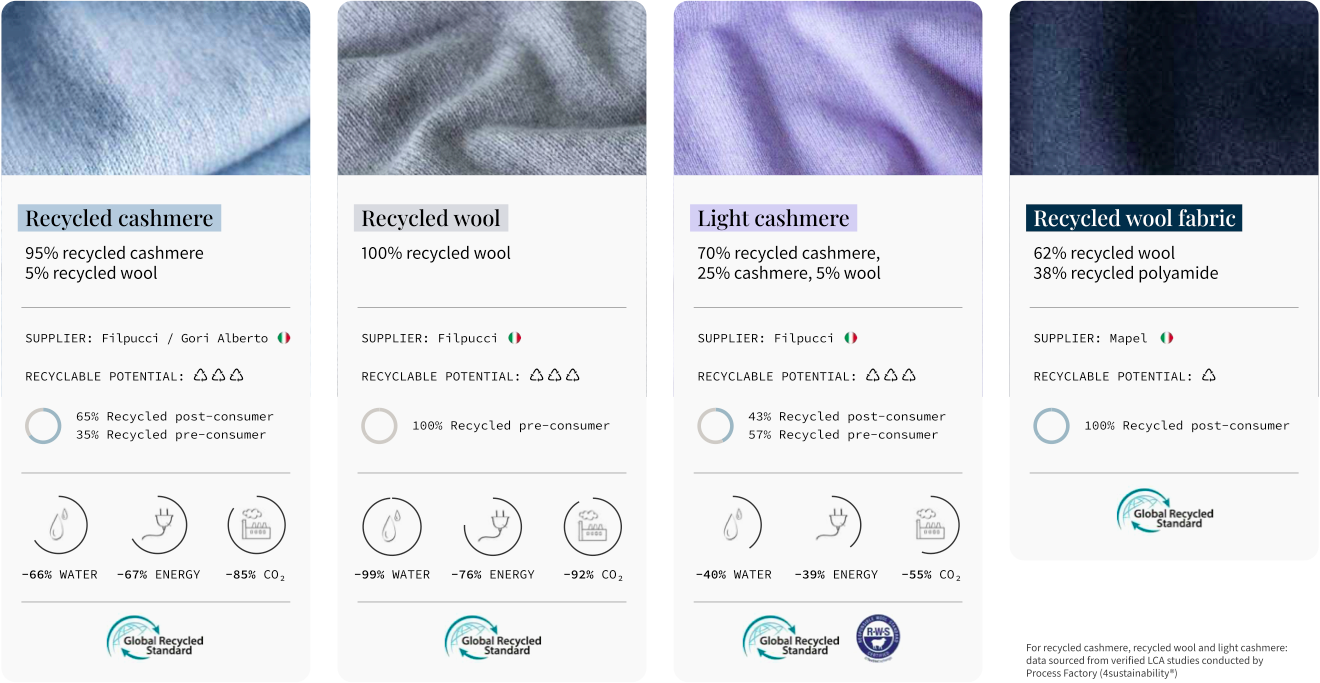
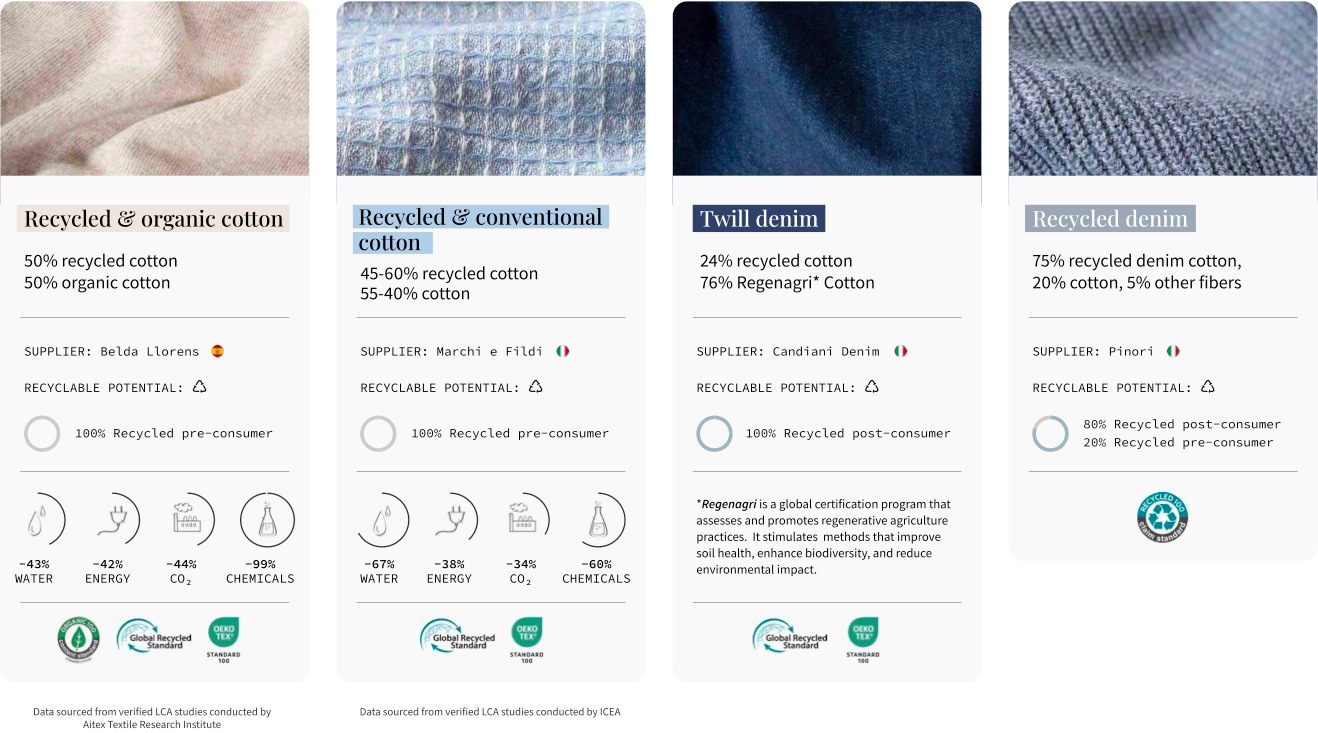
Image 1: Recycled fabric samples retrieved from https://cdn.shopify.com/s/files/1/0293/9627/1197/files/Sustainability_Report_2024_Rifo_circular_fashion_made_in_Italy-maggio-web.pdf?v=1748532366
3.2 Innovations in colour and finish
Rifò takes an innovative approach to colouring materials, based on the chromatic selection of pre-consumer textile waste rather than traditional chemical re-dyeing. Fabrics are sorted according to their original shades before the recycling process, thus eliminating the need for new dyeing stages.
This choice avoids the use of synthetic dyes and preserves the structural quality of the fibres, which remain more suitable for subsequent recycling cycles.
3.3 Product life cycle and take-back system
Rifò is a circular economy initiative based on collaboration and active community participation. It invites citizens to contribute directly to the textile regeneration process by handing in their old garments to be transformed into new sustainable yarns.
Launched in 2019, the collection service was designed to offer a concrete alternative to textile waste, rewarding those who return their used garments with an incentive in the form of a discount code. Today, the take-back system stands out for its transparency and accessibility, operating both online and through physical points, and accepting garments of any brand made of wool, cashmere and denim. The company only selects jumpers made from 100% pure cashmere or wool and jeans made from at least 95% cotton. This choice stems from the need to ensure that the materials collected can actually be recycled, as current recycling technologies are only effective with fabrics that are almost single-material in composition.
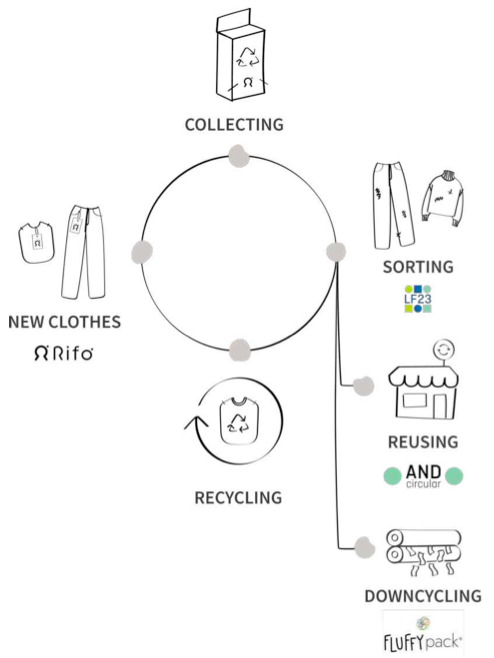
Image 2: Rifò’s textile recycling process retrieved from https://cdn.shopify.com/s/files/1/0293/9627/1197/files/Sustainability_Report_2024_Rifo_circular_fashion_made_in_Italy-maggio-web.pdf?v=1748532366
4. Collaboration and transparency
4.1 Collaboration and integration of ecosystems
Rifò adopts a production model based on collaboration with local recycling consortia, small manufacturers and artisans in the area, promoting environmental, economic and social sustainability. Since its foundation, Rifò has chosen to concentrate its activities in the textile district of Prato, where in 2024 approximately 90% of production took place within a 30 km radius of the company headquarters. This short supply chain strategy allows us to:
-
Minimise the environmental impact of transport, reducing logistics-related emissions;
-
Support the local economy, enhancing the productive and artisanal fabric of the territory;
-
Optimise production times, which average between three and five weeks from the availability of yarns
-
Ensure quality and traceability through direct relationships with local suppliers
-
Preserve the local textile tradition, contributing to the promotion of sustainable Made in Italy.
The Rifò model demonstrates how proximity to production, combined with a circular vision of fashion, can generate shared value and represent a paradigm of regenerative economics applied to the textile sector.
4.2 Traceability and communication of materials
The product label provides detailed information on fibre composition, the origin of recycled materials and the geographical area of production.
Through clear and narrative communication about the materials used, the brand promotes greater consumer awareness of the recyclability potential of garments.
Product traceability plays a key role in terms of transparency and social responsibility. Rifò attaches great importance to these aspects, aiming for short supply chain production, where every stage, from fabric to finished product, takes place close to its factories.
The origin of the materials is verified through GRS (Global Recycle Standard) certified suppliers, who guarantee the origin of the regenerated cashmere, while regular checks on the yarn ensure its purity and quality. This approach allows for the development of a transparent production process, with weekly monitoring throughout the entire supply chain.
5. Key points for designers
Designing with a focus on recyclability involves not only the final product, but also integration with local suppliers. Key elements of this strategy include the quality and purity of the fibres, colour harmony and structural simplicity of the design, which facilitate the recovery and reuse of materials.
Collaboration throughout the entire value chain, from designers to spinners to recyclers, is crucial to ensuring that every product can be effectively recycled.
Reference
Rifò. (2024). Sustainability report 2024: Circular fashion made in Italy. https://cdn.shopify.com/s/files/1/0293/9627/1197/files/Sustainability_Report_2024_Rifo_circular_fashion_made_in_Italy-maggio-web.pdf