# Design For Modularity — English
## Introduction
The following Training Modules were produced by Lottozero Textile laboratories as an output of the IMASUS project, co-funded by the ERASMUS+ Programme of the European Union.
The content of this document represents the views of the author only and is his/her sole responsibility; it cannot be considered to reflect the views of the European Commission or any other body of the European Union. The European Commission do not accept any responsibility for the use that may be made of the information it contains.
The reuse of this document is permitted under the [Creative Commons Attribution 4.0 International (CC BY 4.0) license](https://creativecommons.org/licenses/by/4.0/), provided that appropriate credit is given and any changes are indicated.
Contributing expert: Arianna Moroder
Author: Lauren Berardi
### About
IMASUS (Imagineering Sustainability) is a pioneering initiative dedicated to transforming the fashion industry towards sustainability and addressing climate change challenges and led by the partnership of the Institute of Nanoscience and Materials of Aragon, Lottozero textile laboratories, Munkun creative strategy & learning studio and the European Creative Hubs Network.
Fashion, while influential, is one of the largest contributors to environmental degradation. IMASUS seeks to catalyze a shift in industry practices by promoting sustainable methods, such as using organic materials, recycling, and adopting circular design principles. Our goal is to inspire a widespread change in behaviors and practices, fostering a sustainable, ethical, and creative future for fashion.
The project integrates academic research, industry expertise, and practical learning experiences to equip fashion professionals with the necessary skills and tools for the sustainable fashion sector. Through workshops, digital tools, and collaborative approaches, we are building a community focused on innovation and real-world solutions for the fashion industry.
---
Funded by the European Union. Views and opinions expressed are however those of the author(s) only and do not necessarily reflect those of the European Union or the European Education and Culture Executive Agency (EACEA). Neither the European Union nor EACEA can be held responsible for them.
## Training Module
# 1. Introduction: Understanding modularity in fashion
Modularity is a design approach in which a system is composed of independent yet interconnected units that can be combined, removed, or replaced without redesigning the entire structure (Zhang et al., 2024). Each module performs a defined function while remaining compatible with the overall system.
In fashion, modularity translates into garments constructed from detachable or interchangeable components. Sleeves, collars, panels, linings, or other elements can be added, removed, or reconfigured, allowing a single garment to generate multiple variations. Rather than existing as fixed objects, modular garments function as adaptable systems.
This approach redefines the relationship between designer, garment, and wearer. The garment becomes dynamic rather than static. Dressing becomes a participatory act in which the wearer actively configures the final form.
## 1.1 Why modularity is important today
From a sustainability perspective, modular design offers a strategy for extending product life and reducing material use. Instead of purchasing multiple garments to satisfy different aesthetic or functional needs, users can adapt one garment across contexts.
Modularity addresses several contemporary challenges:
- Overproduction and overconsumption
- Short product lifecycles
- Limited repairability
- Resource inefficiency
By allowing parts to be replaced or updated independently, modular garments reduce the need for complete replacement. If a sleeve wears out, it can be replaced without discarding the entire jacket. If seasonal needs change, components can be adapted rather than replaced.
Importantly, modularity encourages a more conscious relationship with clothing. When users participate in configuring or updating garments, attachment often increases. This participatory dimension can counteract disposability culture.
## 1.2 Modularity and Circularity
Modularity is closely aligned with circular economy principles, particularly those focused on extending product life and enabling repair. While recycling operates at the end of a garment’s life, modularity intervenes during its active use phase.
Designing garments that can be repaired, transformed, or upgraded supports a recover–reuse–repair logic rather than a take–make–dispose model. By maintaining the value of materials and labour embedded in a garment, modularity contributes to reducing waste and lowering environmental impact.
At the same time, modularity must be implemented thoughtfully. If modules are produced excessively or replaced purely for aesthetic novelty, the environmental benefit may be undermined. The effectiveness of modular design depends on how it is integrated into broader sustainability strategies.
## 1.3 Learning Objectives
By the end of this module, learners should be able to:
- Define modularity as a design method in fashion
- Explain the relationship between modular design and circular principles
- Identify historical and contemporary examples of modular garments
- Analyse the environmental and systemic implications of modularity
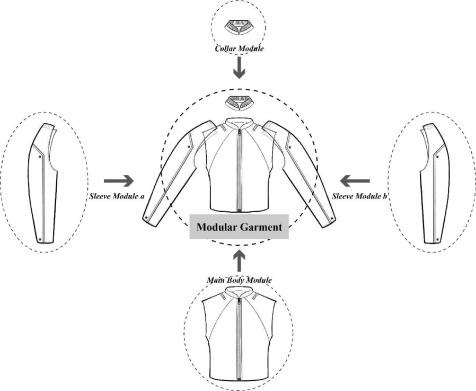 **Image 1:** Diagram illustrating a modular garment system with detachable sleeve, collar, and body modules, retrieved from [https://www.sciencedirect.com/science/article/pii/S0921344924000892](https://www.sciencedirect.com/science/article/pii/S0921344924000892?utm_source=chatgpt.com)
# 2. Historical roots and evolution of modularity in fashion
Modularity in fashion is often associated with contemporary sustainability discourse, yet its origins are deeply historical. Long before the term was formalised, garments were constructed with detachable or interchangeable elements for practical, economic, and symbolic reasons.
## 2.1 Renaissance Modularity
Although modular fashion is typically linked to the twentieth century, earlier examples can be traced to Renaissance Europe. Detachable sleeves, collars, and decorative inserts were common features of elite dress. These elements were attached using laces, ribbons, or ties, allowing them to be removed for washing, repair, or aesthetic variation.
Beyond functionality, modular components served as markers of wealth and social status. Fine fabrics and elaborate detailing could be concentrated in removable sections, which were easier to update or replace. This system allowed garments to be reconfigured while preserving the core structure.
In this context, modularity functioned as both a practical solution and a symbol of prestige.
**Image 1:** Diagram illustrating a modular garment system with detachable sleeve, collar, and body modules, retrieved from [https://www.sciencedirect.com/science/article/pii/S0921344924000892](https://www.sciencedirect.com/science/article/pii/S0921344924000892?utm_source=chatgpt.com)
# 2. Historical roots and evolution of modularity in fashion
Modularity in fashion is often associated with contemporary sustainability discourse, yet its origins are deeply historical. Long before the term was formalised, garments were constructed with detachable or interchangeable elements for practical, economic, and symbolic reasons.
## 2.1 Renaissance Modularity
Although modular fashion is typically linked to the twentieth century, earlier examples can be traced to Renaissance Europe. Detachable sleeves, collars, and decorative inserts were common features of elite dress. These elements were attached using laces, ribbons, or ties, allowing them to be removed for washing, repair, or aesthetic variation.
Beyond functionality, modular components served as markers of wealth and social status. Fine fabrics and elaborate detailing could be concentrated in removable sections, which were easier to update or replace. This system allowed garments to be reconfigured while preserving the core structure.
In this context, modularity functioned as both a practical solution and a symbol of prestige.

 **Image 2:** Portrait illustrating sixteenth-century Italian dress and detachable garment elements, retrieved from [https://www.arteapalazzo.it/moda/la-moda-nel-xvi-secolo-1500-1550/](https://www.arteapalazzo.it/moda/la-moda-nel-xvi-secolo-1500-1550/?utm_source=chatgpt.com)
**Image 3:** Raphael’s *Dama col liocorno* (Lady with a Unicorn), illustrating Renaissance garment construction and layered bodice design, retrieved from
## 2.2 Victorian Adaptability and Functionality
In the Victorian period, modularity continued to shape clothing design, particularly in response to economic and social constraints.
In menswear, detachable shirt fronts or collars (dickeys) allowed men to maintain a formal appearance without laundering entire garments. In womenswear, interchangeable bodices and skirts enabled a single dress to be adapted for daytime or evening use.
These solutions provided versatility and reduced material expenditure. Modularity allowed garments to respond to shifting social expectations without requiring complete replacement.
**Image 2:** Portrait illustrating sixteenth-century Italian dress and detachable garment elements, retrieved from [https://www.arteapalazzo.it/moda/la-moda-nel-xvi-secolo-1500-1550/](https://www.arteapalazzo.it/moda/la-moda-nel-xvi-secolo-1500-1550/?utm_source=chatgpt.com)
**Image 3:** Raphael’s *Dama col liocorno* (Lady with a Unicorn), illustrating Renaissance garment construction and layered bodice design, retrieved from
## 2.2 Victorian Adaptability and Functionality
In the Victorian period, modularity continued to shape clothing design, particularly in response to economic and social constraints.
In menswear, detachable shirt fronts or collars (dickeys) allowed men to maintain a formal appearance without laundering entire garments. In womenswear, interchangeable bodices and skirts enabled a single dress to be adapted for daytime or evening use.
These solutions provided versatility and reduced material expenditure. Modularity allowed garments to respond to shifting social expectations without requiring complete replacement.
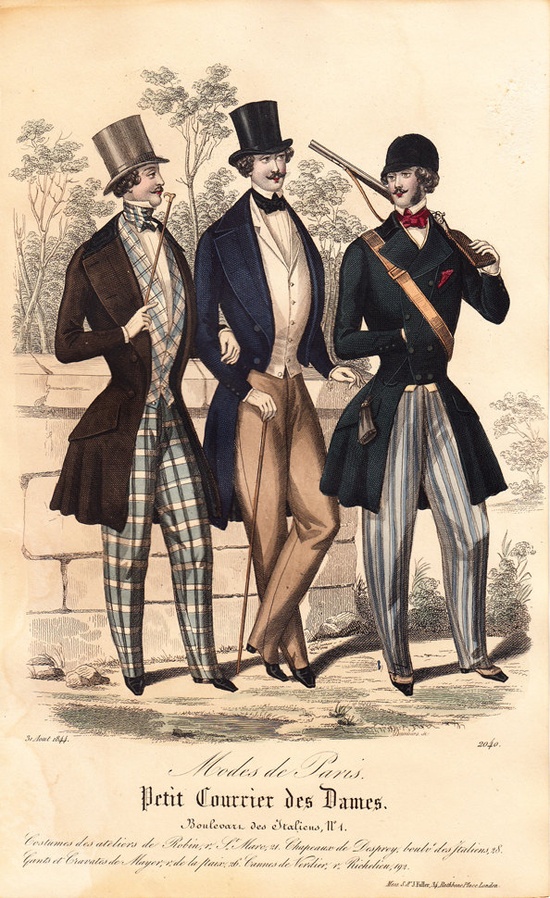 **Image 4:** Illustration of Victorian-era menswear demonstrating layered tailoring and detachable garment components, retrieved from
## 2.3 Military and Workwear Influence
The twentieth century introduced new forms of modular logic through military and workwear systems. As mass production expanded, standardisation became essential. Military uniforms incorporated interchangeable components — pockets, layers, fastening systems — to improve efficiency and maintenance.
During and after World War II, innovations in synthetic fibres and large-scale production contributed to modular equipment systems governed by military specifications (MIL-SPEC). Standardised sizing, fastening mechanisms, and replaceable parts simplified repair and ensured compatibility across components.
These principles later influenced civilian sectors such as outdoor clothing and functional fashion. Durability, adaptability, and interchangeability became central features of performance garments.
In this phase, modularity shifted from decorative variation to technical functionality.
## 2.4 Modernist and Avant-Garde Experiments
In the 1960s and 1970s, designers such as Pierre Cardin, André Courrèges, and Rudi Gernreich experimented with modular construction, detachable panels, and futuristic silhouettes. These explorations reflected broader cultural movements toward minimalism, space-age aesthetics, and structural innovation.
A significant milestone emerged in 1997 with Issey Miyake and Dai Fujiwara’s **A-POC (A Piece of Cloth)** project (L’Officiel Italia, 2020). This system enabled garments to be cut directly from a continuous textile tube, allowing users to customise shapes with minimal waste. A-POC anticipated later conversations about circularity and material efficiency by integrating modularity into textile design itself.
These experiments demonstrated that modularity could operate as both conceptual exploration and structural innovation.
**Image 4:** Illustration of Victorian-era menswear demonstrating layered tailoring and detachable garment components, retrieved from
## 2.3 Military and Workwear Influence
The twentieth century introduced new forms of modular logic through military and workwear systems. As mass production expanded, standardisation became essential. Military uniforms incorporated interchangeable components — pockets, layers, fastening systems — to improve efficiency and maintenance.
During and after World War II, innovations in synthetic fibres and large-scale production contributed to modular equipment systems governed by military specifications (MIL-SPEC). Standardised sizing, fastening mechanisms, and replaceable parts simplified repair and ensured compatibility across components.
These principles later influenced civilian sectors such as outdoor clothing and functional fashion. Durability, adaptability, and interchangeability became central features of performance garments.
In this phase, modularity shifted from decorative variation to technical functionality.
## 2.4 Modernist and Avant-Garde Experiments
In the 1960s and 1970s, designers such as Pierre Cardin, André Courrèges, and Rudi Gernreich experimented with modular construction, detachable panels, and futuristic silhouettes. These explorations reflected broader cultural movements toward minimalism, space-age aesthetics, and structural innovation.
A significant milestone emerged in 1997 with Issey Miyake and Dai Fujiwara’s **A-POC (A Piece of Cloth)** project (L’Officiel Italia, 2020). This system enabled garments to be cut directly from a continuous textile tube, allowing users to customise shapes with minimal waste. A-POC anticipated later conversations about circularity and material efficiency by integrating modularity into textile design itself.
These experiments demonstrated that modularity could operate as both conceptual exploration and structural innovation.
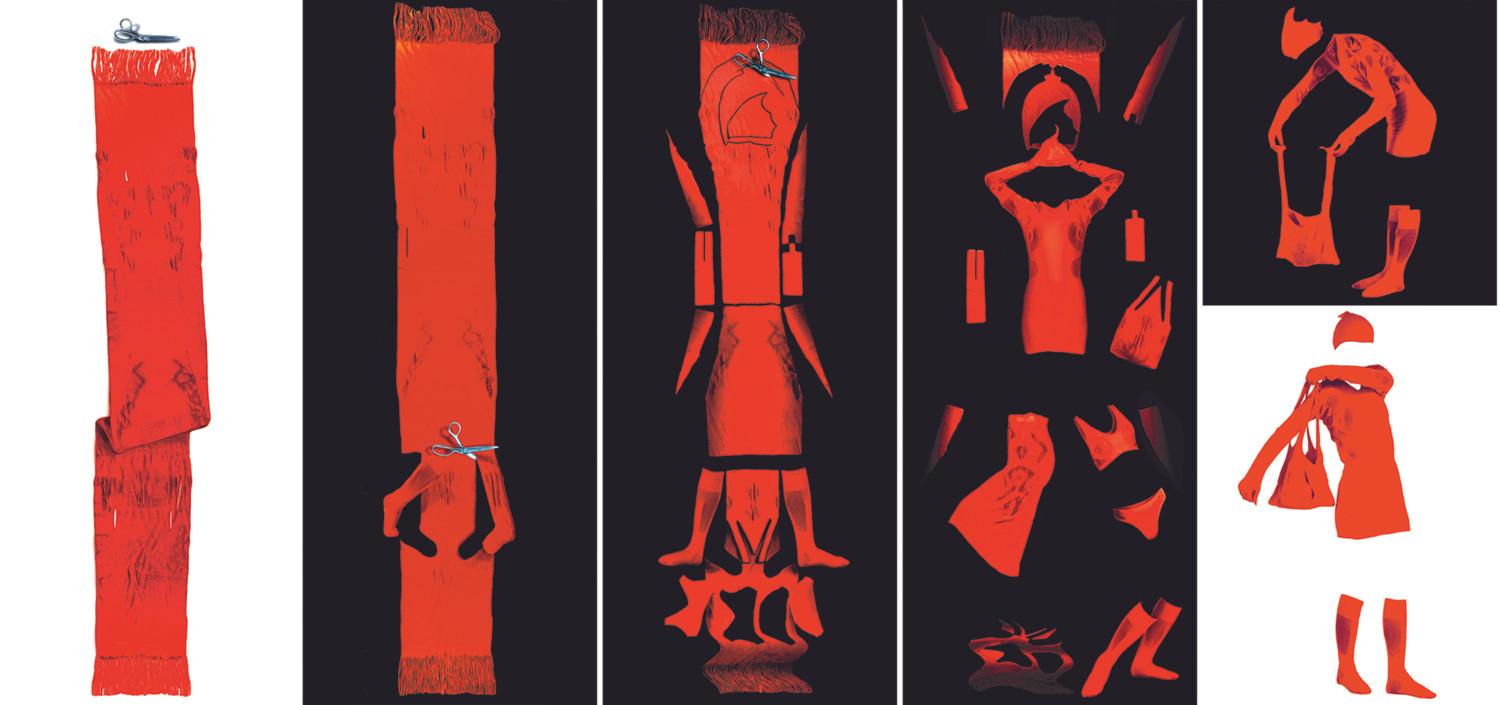 **Image 5:** A-POC (A Piece of Cloth) concept by Issey Miyake, showing garments engineered from a single continuous textile tube to minimise cutting waste, retrieved from
## 2.5 Contemporary Modularity (2000–Present)
With the rise of fast fashion in the late twentieth century, clothing cycles accelerated and garments became increasingly disposable. In response, modular fashion has re-emerged as a strategy for extending use and reducing material throughput.
Contemporary modular design emphasises:
- Reusability
- Repairability
- Replaceable components
- Transformability
Aligned with circular principles, modular garments reduce environmental impact by enabling partial updates instead of full replacement. However, modularity must be implemented thoughtfully. If modular components are produced excessively or driven by aesthetic novelty alone, they risk reproducing the same consumption patterns they aim to challenge.
Today, modular fashion occupies a dual space: it is both a research-driven design strategy and a growing commercial practice. Its effectiveness depends on balancing adaptability, durability, and user engagement.
**Image 5:** A-POC (A Piece of Cloth) concept by Issey Miyake, showing garments engineered from a single continuous textile tube to minimise cutting waste, retrieved from
## 2.5 Contemporary Modularity (2000–Present)
With the rise of fast fashion in the late twentieth century, clothing cycles accelerated and garments became increasingly disposable. In response, modular fashion has re-emerged as a strategy for extending use and reducing material throughput.
Contemporary modular design emphasises:
- Reusability
- Repairability
- Replaceable components
- Transformability
Aligned with circular principles, modular garments reduce environmental impact by enabling partial updates instead of full replacement. However, modularity must be implemented thoughtfully. If modular components are produced excessively or driven by aesthetic novelty alone, they risk reproducing the same consumption patterns they aim to challenge.
Today, modular fashion occupies a dual space: it is both a research-driven design strategy and a growing commercial practice. Its effectiveness depends on balancing adaptability, durability, and user engagement.
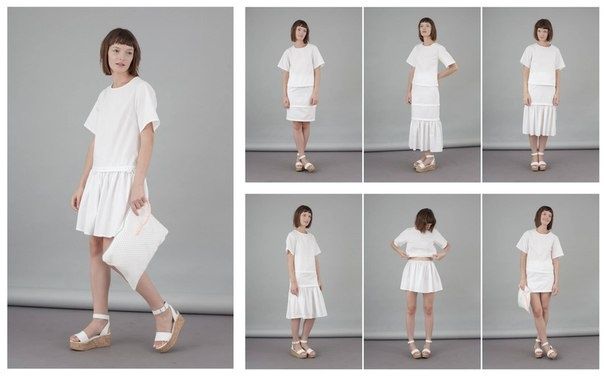 **Image 6:** Modular garment system by Flavia La Rocca retrieved from
# 3. Theoretical frameworks for modularity in fashion
Modularity in fashion can be understood not only as a construction method, but as a systemic design strategy. It operates at the intersection of product design, user participation, and service-oriented business models. To fully grasp its potential, it is useful to examine modularity through broader theoretical lenses.
## 3.1 Systems Thinking and Modular Design
Systems thinking views products as part of interconnected networks rather than isolated objects (Casciani, 2023). In fashion, a garment interacts with material supply chains, manufacturing processes, distribution systems, user behaviour, and end-of-life infrastructures.
Modular design reflects this systemic perspective. Each component of a garment functions as an independent unit while remaining integrated within a larger structure. When a sleeve, panel, or lining can be replaced without discarding the entire garment, the system becomes more flexible and resilient.
This logic mirrors modular systems in architecture and industrial design, where independent elements allow adaptation without total reconstruction. In fashion, this approach challenges the idea of the garment as a fixed, indivisible entity. Instead, clothing becomes a configurable system capable of responding to change.
Systems thinking, therefore, reframes modularity as a structural strategy that anticipates evolution rather than permanence.
## 3.2 Product–Service Systems (PSS)
Modularity aligns closely with the concept of Product–Service Systems (PSS), which integrate physical products with services to create value beyond ownership (Rinaldi, 2019).
In a traditional model, value is generated through repeated sales of new garments. In a PSS model, value can be created through:
- Repair services
- Component replacement
- Subscription models
- Rental or exchange systems
- Upgrade programmes
Modular garments facilitate these services because components can be updated independently. A worn-out module can be replaced, a seasonal module can be swapped, and a stylistic update can occur without manufacturing a completely new garment.
This approach shifts emphasis from volume-based production to long-term engagement. Rather than encouraging disposal, the system supports maintenance and transformation.
However, the environmental benefit of PSS depends on responsible implementation. If modules are replaced frequently for novelty rather than necessity, material throughput may not decrease. Modularity must therefore be integrated within broader sustainability goals.
## 3.3 Co-Creation and User Participation
One of the most distinctive aspects of modular fashion is the active role of the user. When garments can be reconfigured, the wearer becomes a participant in the design process.
This participatory dimension introduces an element of co-creation. Users select configurations, adapt modules to context, and sometimes replace components themselves. Such interaction can strengthen attachment by increasing familiarity and agency.
Unlike conventional garments, which are completed before purchase, modular garments retain an element of openness. The final form may change over time, reflecting the wearer’s needs and preferences.
Co-creation therefore contributes not only to adaptability but also to longer-term engagement.
## 3.4 Modularity and Emotional Attachment
The emotional durability of a product refers to a brand's ability to create a lasting emotional bond between the object and its user (Chapman, 2005). This connection arises from the association of the product with positive experiences and feelings, going beyond its functional or technical value.
In the field of sustainable design, various design strategies are adopted to strengthen the emotional bond between the user and the product, with the aim of preventing disposal. In fashion, not only are factors such as comfort, fit and aesthetics important, but also the services provided during and after purchase, such as assistance, warranty, repair and replacement. All these factors influence the perceived value of the garment, determining whether it will be preserved, cared for or discarded by the consumer.
Modularity encourages this type of relationship by allowing garments to be adapted, updated and personalised. The ability to change the look and configuration of a garment according to one's preferences strengthens the emotional bond between the garment and the wearer, transforming clothing into a means of personal expression.
**Image 6:** Modular garment system by Flavia La Rocca retrieved from
# 3. Theoretical frameworks for modularity in fashion
Modularity in fashion can be understood not only as a construction method, but as a systemic design strategy. It operates at the intersection of product design, user participation, and service-oriented business models. To fully grasp its potential, it is useful to examine modularity through broader theoretical lenses.
## 3.1 Systems Thinking and Modular Design
Systems thinking views products as part of interconnected networks rather than isolated objects (Casciani, 2023). In fashion, a garment interacts with material supply chains, manufacturing processes, distribution systems, user behaviour, and end-of-life infrastructures.
Modular design reflects this systemic perspective. Each component of a garment functions as an independent unit while remaining integrated within a larger structure. When a sleeve, panel, or lining can be replaced without discarding the entire garment, the system becomes more flexible and resilient.
This logic mirrors modular systems in architecture and industrial design, where independent elements allow adaptation without total reconstruction. In fashion, this approach challenges the idea of the garment as a fixed, indivisible entity. Instead, clothing becomes a configurable system capable of responding to change.
Systems thinking, therefore, reframes modularity as a structural strategy that anticipates evolution rather than permanence.
## 3.2 Product–Service Systems (PSS)
Modularity aligns closely with the concept of Product–Service Systems (PSS), which integrate physical products with services to create value beyond ownership (Rinaldi, 2019).
In a traditional model, value is generated through repeated sales of new garments. In a PSS model, value can be created through:
- Repair services
- Component replacement
- Subscription models
- Rental or exchange systems
- Upgrade programmes
Modular garments facilitate these services because components can be updated independently. A worn-out module can be replaced, a seasonal module can be swapped, and a stylistic update can occur without manufacturing a completely new garment.
This approach shifts emphasis from volume-based production to long-term engagement. Rather than encouraging disposal, the system supports maintenance and transformation.
However, the environmental benefit of PSS depends on responsible implementation. If modules are replaced frequently for novelty rather than necessity, material throughput may not decrease. Modularity must therefore be integrated within broader sustainability goals.
## 3.3 Co-Creation and User Participation
One of the most distinctive aspects of modular fashion is the active role of the user. When garments can be reconfigured, the wearer becomes a participant in the design process.
This participatory dimension introduces an element of co-creation. Users select configurations, adapt modules to context, and sometimes replace components themselves. Such interaction can strengthen attachment by increasing familiarity and agency.
Unlike conventional garments, which are completed before purchase, modular garments retain an element of openness. The final form may change over time, reflecting the wearer’s needs and preferences.
Co-creation therefore contributes not only to adaptability but also to longer-term engagement.
## 3.4 Modularity and Emotional Attachment
The emotional durability of a product refers to a brand's ability to create a lasting emotional bond between the object and its user (Chapman, 2005). This connection arises from the association of the product with positive experiences and feelings, going beyond its functional or technical value.
In the field of sustainable design, various design strategies are adopted to strengthen the emotional bond between the user and the product, with the aim of preventing disposal. In fashion, not only are factors such as comfort, fit and aesthetics important, but also the services provided during and after purchase, such as assistance, warranty, repair and replacement. All these factors influence the perceived value of the garment, determining whether it will be preserved, cared for or discarded by the consumer.
Modularity encourages this type of relationship by allowing garments to be adapted, updated and personalised. The ability to change the look and configuration of a garment according to one's preferences strengthens the emotional bond between the garment and the wearer, transforming clothing into a means of personal expression.
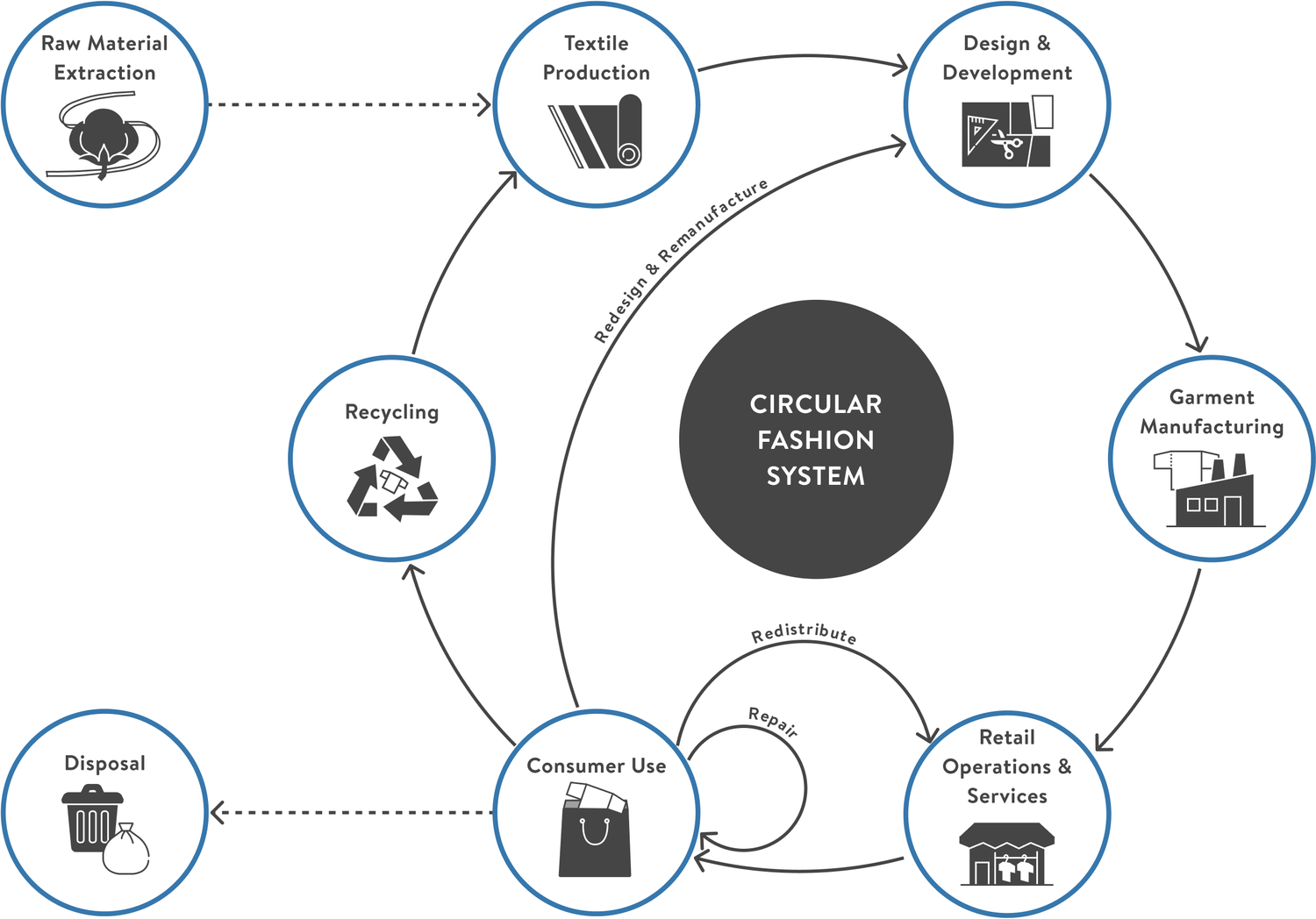 **Image 7:** Circular fashion system diagram retrieved from [https://www.redressdesignaward.com/academy/resources/guide/design-for-longevity](https://www.redressdesignaward.com/academy/resources/guide/design-for-longevity?utm_source=chatgpt.com)
# 4. Modularity and sustainability
Modularity is often discussed as a design innovation, but it is also a sustainability strategy. By enabling garments to be updated, repaired, and adapted over time, modular design can extend product lifespan and reduce waste. Its impact is strongest when modularity supports long-term use rather than short-term novelty.
## 4.1 Product Life Cycle: A Brief Definition
A product’s life cycle describes the phases it typically moves through from design to withdrawal from the market. It is often described through five stages: development, introduction, growth, maturity, and decline (Qualtrics, n.d.).
The length of a product life cycle varies depending on the product type, market context, and business strategy. Some products remain stable for many years with minimal change. In fashion, however, garments are usually tied to rapid renewal cycles driven by seasons, trends, and marketing. This short cycle contributes to frequent replacement and rising textile waste.
A sustainability objective for fashion is therefore to extend the life cycle of garments, reducing replacement frequency and lowering overall environmental impact.
**Image 7:** Circular fashion system diagram retrieved from [https://www.redressdesignaward.com/academy/resources/guide/design-for-longevity](https://www.redressdesignaward.com/academy/resources/guide/design-for-longevity?utm_source=chatgpt.com)
# 4. Modularity and sustainability
Modularity is often discussed as a design innovation, but it is also a sustainability strategy. By enabling garments to be updated, repaired, and adapted over time, modular design can extend product lifespan and reduce waste. Its impact is strongest when modularity supports long-term use rather than short-term novelty.
## 4.1 Product Life Cycle: A Brief Definition
A product’s life cycle describes the phases it typically moves through from design to withdrawal from the market. It is often described through five stages: development, introduction, growth, maturity, and decline (Qualtrics, n.d.).
The length of a product life cycle varies depending on the product type, market context, and business strategy. Some products remain stable for many years with minimal change. In fashion, however, garments are usually tied to rapid renewal cycles driven by seasons, trends, and marketing. This short cycle contributes to frequent replacement and rising textile waste.
A sustainability objective for fashion is therefore to extend the life cycle of garments, reducing replacement frequency and lowering overall environmental impact.
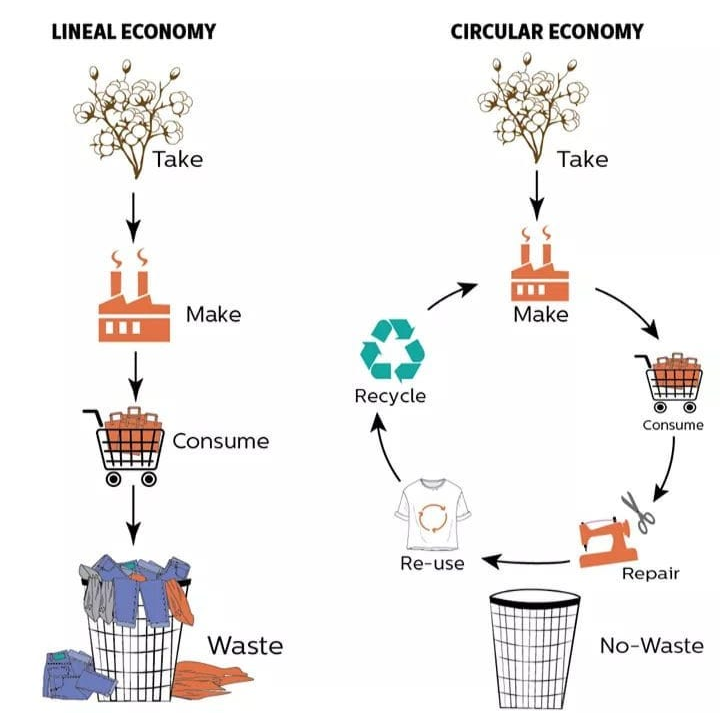 **Image 8:** Diagram comparing the linear economy with the circular economy model retrieved from
## 4.2 Extending Product Life Through Modular Design
Modularity can extend garment life in practical ways. Instead of replacing an entire garment, the user can replace or upgrade only the part that is damaged, worn, or no longer functional.
For example:
- a worn-out collar or cuff can be replaced
- a lining can be updated without discarding the outer shell
- a component can be swapped to adapt the garment to a new season or use
In this way, modularity supports maintenance and renewal during the use phase, keeping garments in circulation for longer.
Modularity can also enable partial redesign. Updating a single module can refresh the aesthetics or functionality of a garment while preserving its main structure. This reduces the need for full replacement and helps maintain the value already embedded in materials and labour.
## 4.3 Reducing Waste and Resource Use
A modular approach can reduce waste by shifting production away from complete garments and toward standardised, interchangeable components. In principle, this supports more efficient resource use across time because:
- fewer full garments may be needed to achieve variation
- components can be produced, replaced, or repaired selectively
- garment updates may require fewer materials than new purchases
When designed well, modularity reduces waste not only at end-of-life but also across the product’s active lifespan, by preventing premature disposal.
## 4.4 Consumer Empowerment and a Culture of Repair
Modularity encourages behaviours that support sustainability, including repair, reuse, and customisation. Because garments can be altered without specialist intervention in some cases, users may feel more capable of maintaining and updating their clothing.
This reinforces a culture of care: garments are treated as adaptable objects that deserve maintenance rather than as disposable goods. Modularity can therefore support both practical longevity and more responsible consumer habits.
## 4.5 Potential Pitfalls
Despite its potential, modularity is not automatically sustainable. Two key risks should be considered:
**Greenwashing**
Modularity can be presented as a sustainability solution without producing meaningful reductions in impact. If modular garments are marketed as “circular” but are not designed for durability, repair, or genuine long-term use, modularity becomes a branding strategy rather than a sustainability practice.
**Excessive complexity**
Highly complex garments with too many components, difficult fastening systems, or confusing configurations can reduce usability. If a modular garment is inconvenient to assemble, uncomfortable, or visually inconsistent, it may discourage use — undermining the intended longevity benefits.
For modularity to support sustainability, the design must remain functional, durable, and easy to use, and it must encourage *less* consumption rather than merely different consumption.
# 5. Fundamental design principles for modularity
For modularity to function effectively, design decisions must prioritise compatibility, durability, and usability. Modular garments are systems, and like any system, they depend on clearly defined relationships between components.
## 5.1 Interchangeable Components
From historical tradition to contemporary fashion, the evolution of modular fashion shows a clear conceptual continuity: from the detachable sleeves of past centuries to modern interchangeable panels and components. This design logic gives rise to a veritable “wardrobe architecture”, built on a basic structure enriched with replaceable layers and coverings that allow the garment to transform and adapt to different contexts without losing aesthetic coherence.
Modular design is achieved by adding or removing components from a one-piece garment.
It is divided into two categories: single-function modules and multi-function modules (Zhang et al., 2024):
- **Single-function module:** the component has a fixed position and can be added or removed without altering the main structure of the garment. For example, a shirt with interchangeable collar, cuff, and pocket modules allows variation in appearance while maintaining structural integrity.
- **Multi-function module:** the component has two or more functions and role conversions. It consists of transforming the module from its original role to another, such as converting trousers into a skirt or sleeves into trouser legs.
## 5.2 Standardised Fastenings
In fashion, interfaces are the structural connections between modules that allow assembly and separation, such as closure systems.
From laces, ribbons, and buttons in earlier periods to press studs, magnets, and zips in the modern age, fastening systems have always been essential. To achieve a high level of modularity, it is necessary to use standardised interfaces — for example, consistent button sizes, identical eyelets, uniform zip lengths, and compatible hook dimensions (Casciani, 2023).
Standardisation enables modules to be interchanged, combined, or replaced repeatedly and flexibly, increasing system versatility.
Fastening interfaces must comply with two key properties:
- **Standard fastenings:** fastening systems must share the same type, length, and size to ensure compatibility.
- **Ease of use:** closure systems should be simple and limited to two functions — connecting and disconnecting modules.
| | | |
|------------------------------|---------------------------------------------------------------------------------------|------------------------------------------------------------------------------------------------|
| **Closure systems** | **Functionality** | **Application in modular fashion** |
| Zips | They allow for quick opening and closing, joining or separating parts of the garment. | Used to connect modules (sleeves, panels, hoods), facilitating disassembly and transformation. |
| Buttons | Manual fastening, replaceable or decorative. | They allow for the interchangeability of elements without permanent seams. |
| Press studs/magnetic buttons | Automatic and accessible closure. | Facilitate use in adaptive clothing and allow for frequent adjustments. |
| Velcro | Quick and adjustable fastening. | Promotes customisation and adaptability, especially in sports and technical garments. |
| Modular seams | Temporary joining of textile components. | Facilitates replacement or repair of damaged parts. |
| Removable linings | Allow the garment to be adapted to the seasons or use. | Improve maintenance, promote recycling and product longevity. |
| Removable hems | Modification of the length or silhouette of the garment. | Extend the life of the product and increase its versatility. |
## 5.3 Design for Disassembly and Repair
Design for disassembly is an approach that aims to create products that can be easily disassembled at the end of their life cycle, facilitating material separation for reuse, repair, or recycling (Transitions Project, n.d.). This involves developing garments with removable components such as buttons, zips, or linings.
This strategy extends garment life by simplifying the replacement of damaged parts and supporting transformation and reuse. Separating fabrics and accessories also improves recycling efficiency by avoiding fibre mixtures that are difficult to process.
Beyond technical considerations, design for disassembly promotes a more responsible consumption mindset by encouraging users to participate actively in maintenance and regeneration.
## 5.4 Material Compatibility
Material selection must support modular performance. Components should behave cohesively when assembled.
Designers must consider:
- Weight distribution
- Drape consistency
- Fibre shrinkage compatibility
- Resistance to stress at connection points
If materials respond differently to washing or wear, modular coherence deteriorates.
Compatibility, therefore affects both structural longevity and user experience.
## 5.5 Aesthetic Integrity
In modular fashion design, attention to aesthetic balance is as important as functionality. While maintaining the possibility of disassembling and reassembling the different elements, it is essential that the modules integrate visually in a coherent manner, avoiding unwanted contrasts or visual discontinuities.
- **Colours**: careful colour selection is essential to achieve a visually balanced design. The construction of a coherent palette can be based on different colour combinations: the use of analogous colours, which create soft and natural transitions; complementary colours, which generate dynamic contrasts; or monochromatic variations, which enhance the depth of a single shade.
- **Proportions**: in addition to colour choice, it is essential to consider the overall proportions of the garment, ensuring that each component, such as sleeves, neckline and hems, maintains visual consistency.
- **Texture**: the selection of materials and textures plays a decisive role in the appearance and perception of the garment. Combining surfaces with different tactile or visual characteristics can add depth and richness to the design, while maintaining a balanced and consistent overall aesthetic.
# 6. Cultural and consumer perspectives
The success of modular fashion depends not only on technical design but also on consumer perception and behaviour. Even the most carefully engineered modular garment will fail if users do not understand, trust, or value its flexibility. Modularity therefore operates at the intersection of design, psychology, and culture.
## 6.1 Consumer Behaviour and Fashion Culture
Fashion consumption is strongly influenced by social norms, identity construction, and trend cycles. Clothing is not only functional but symbolic; it communicates belonging, aspiration, and personal values.
Modular fashion challenges the dominant logic of rapid replacement. Instead of purchasing new garments to signal change, the wearer can reconfigure existing pieces. This shifts the focus from acquisition to adaptation.
However, such a shift requires behavioural adjustment. Consumers accustomed to fixed garments may initially perceive modular systems as unfamiliar or complex. The success of modular fashion therefore depends on intuitive design and clear communication. If the configuration process is cumbersome, the garment risks underuse.
Modularity can encourage more reflective consumption patterns by making transformation visible. When users actively participate in reconfiguring garments, they become more aware of the design process and material value embedded in clothing.
## 6.2 Minimalism and capsule wardrobes
A capsule wardrobe is based on a limited number of versatile, essential garments designed to create multiple combinations suitable for different contexts (Gilardi, n.d.).
Modular clothing operationalises this principle. By enabling multiple configurations from a single garment, it reduces the need for excessive quantities of clothing. This minimalist approach simplifies wardrobe management, limits impulsive purchasing, and encourages more thoughtful consumption.
In this sense, modularity aligns with contemporary movements toward intentional living and reduced material excess.
## 6.3 Barriers to Adoption
Modularity in fashion offers clear advantages, but several obstacles limit wider diffusion.
- **Complexity of design and production** → higher development costs and longer design phases.
- **Limited standardisation** → difficulty scaling modular systems industrially.
- **Aesthetic scepticism** → modularity may be perceived as overly technical or utilitarian.
- **Gaps in consumer education** → unfamiliarity reduces acceptance.
- **Risk of “planned modular obsolescence”** → spare parts could become profit-driven replacements rather than longevity tools.
These challenges translate into practical concerns:
- **High production costs:** Modular garments often require additional research, prototyping, and engineering to ensure structural compatibility and aesthetic coherence.
- **Design complexity:** Modules must align in fabric type, elasticity, weight, and construction. Misalignment can compromise fit, durability, and comfort.
- **Limited consumer awareness:** Many consumers remain unfamiliar with modular systems, which slows adoption.
- **Low market diffusion:** Modular fashion is more common in research contexts, niche brands, and experimental design than in large-scale industrial production.
- **Higher retail prices:** Because of increased development costs and, in many cases, sustainable material choices, modular garments may be less accessible to price-sensitive consumers.
For modularity to contribute meaningfully to sustainability, these structural and cultural barriers must be addressed.
## 6.4 Cultural symbolism
Historically, modular elements in clothing signified wealth and prestige. During the Renaissance, detachable lace sleeves and collars reflected economic power, as they required fine fabrics and complex craftsmanship.
Today, modularity carries different symbolic meaning. It is increasingly associated with sustainability and environmental awareness. Contemporary consumer choices are shaped by ecological knowledge, ethical positioning, and personal values. For some users, selecting adaptable and durable garments becomes a form of responsible self-expression.
Modularity therefore shifts from a marker of status to a marker of environmental consciousness.
**Image 8:** Diagram comparing the linear economy with the circular economy model retrieved from
## 4.2 Extending Product Life Through Modular Design
Modularity can extend garment life in practical ways. Instead of replacing an entire garment, the user can replace or upgrade only the part that is damaged, worn, or no longer functional.
For example:
- a worn-out collar or cuff can be replaced
- a lining can be updated without discarding the outer shell
- a component can be swapped to adapt the garment to a new season or use
In this way, modularity supports maintenance and renewal during the use phase, keeping garments in circulation for longer.
Modularity can also enable partial redesign. Updating a single module can refresh the aesthetics or functionality of a garment while preserving its main structure. This reduces the need for full replacement and helps maintain the value already embedded in materials and labour.
## 4.3 Reducing Waste and Resource Use
A modular approach can reduce waste by shifting production away from complete garments and toward standardised, interchangeable components. In principle, this supports more efficient resource use across time because:
- fewer full garments may be needed to achieve variation
- components can be produced, replaced, or repaired selectively
- garment updates may require fewer materials than new purchases
When designed well, modularity reduces waste not only at end-of-life but also across the product’s active lifespan, by preventing premature disposal.
## 4.4 Consumer Empowerment and a Culture of Repair
Modularity encourages behaviours that support sustainability, including repair, reuse, and customisation. Because garments can be altered without specialist intervention in some cases, users may feel more capable of maintaining and updating their clothing.
This reinforces a culture of care: garments are treated as adaptable objects that deserve maintenance rather than as disposable goods. Modularity can therefore support both practical longevity and more responsible consumer habits.
## 4.5 Potential Pitfalls
Despite its potential, modularity is not automatically sustainable. Two key risks should be considered:
**Greenwashing**
Modularity can be presented as a sustainability solution without producing meaningful reductions in impact. If modular garments are marketed as “circular” but are not designed for durability, repair, or genuine long-term use, modularity becomes a branding strategy rather than a sustainability practice.
**Excessive complexity**
Highly complex garments with too many components, difficult fastening systems, or confusing configurations can reduce usability. If a modular garment is inconvenient to assemble, uncomfortable, or visually inconsistent, it may discourage use — undermining the intended longevity benefits.
For modularity to support sustainability, the design must remain functional, durable, and easy to use, and it must encourage *less* consumption rather than merely different consumption.
# 5. Fundamental design principles for modularity
For modularity to function effectively, design decisions must prioritise compatibility, durability, and usability. Modular garments are systems, and like any system, they depend on clearly defined relationships between components.
## 5.1 Interchangeable Components
From historical tradition to contemporary fashion, the evolution of modular fashion shows a clear conceptual continuity: from the detachable sleeves of past centuries to modern interchangeable panels and components. This design logic gives rise to a veritable “wardrobe architecture”, built on a basic structure enriched with replaceable layers and coverings that allow the garment to transform and adapt to different contexts without losing aesthetic coherence.
Modular design is achieved by adding or removing components from a one-piece garment.
It is divided into two categories: single-function modules and multi-function modules (Zhang et al., 2024):
- **Single-function module:** the component has a fixed position and can be added or removed without altering the main structure of the garment. For example, a shirt with interchangeable collar, cuff, and pocket modules allows variation in appearance while maintaining structural integrity.
- **Multi-function module:** the component has two or more functions and role conversions. It consists of transforming the module from its original role to another, such as converting trousers into a skirt or sleeves into trouser legs.
## 5.2 Standardised Fastenings
In fashion, interfaces are the structural connections between modules that allow assembly and separation, such as closure systems.
From laces, ribbons, and buttons in earlier periods to press studs, magnets, and zips in the modern age, fastening systems have always been essential. To achieve a high level of modularity, it is necessary to use standardised interfaces — for example, consistent button sizes, identical eyelets, uniform zip lengths, and compatible hook dimensions (Casciani, 2023).
Standardisation enables modules to be interchanged, combined, or replaced repeatedly and flexibly, increasing system versatility.
Fastening interfaces must comply with two key properties:
- **Standard fastenings:** fastening systems must share the same type, length, and size to ensure compatibility.
- **Ease of use:** closure systems should be simple and limited to two functions — connecting and disconnecting modules.
| | | |
|------------------------------|---------------------------------------------------------------------------------------|------------------------------------------------------------------------------------------------|
| **Closure systems** | **Functionality** | **Application in modular fashion** |
| Zips | They allow for quick opening and closing, joining or separating parts of the garment. | Used to connect modules (sleeves, panels, hoods), facilitating disassembly and transformation. |
| Buttons | Manual fastening, replaceable or decorative. | They allow for the interchangeability of elements without permanent seams. |
| Press studs/magnetic buttons | Automatic and accessible closure. | Facilitate use in adaptive clothing and allow for frequent adjustments. |
| Velcro | Quick and adjustable fastening. | Promotes customisation and adaptability, especially in sports and technical garments. |
| Modular seams | Temporary joining of textile components. | Facilitates replacement or repair of damaged parts. |
| Removable linings | Allow the garment to be adapted to the seasons or use. | Improve maintenance, promote recycling and product longevity. |
| Removable hems | Modification of the length or silhouette of the garment. | Extend the life of the product and increase its versatility. |
## 5.3 Design for Disassembly and Repair
Design for disassembly is an approach that aims to create products that can be easily disassembled at the end of their life cycle, facilitating material separation for reuse, repair, or recycling (Transitions Project, n.d.). This involves developing garments with removable components such as buttons, zips, or linings.
This strategy extends garment life by simplifying the replacement of damaged parts and supporting transformation and reuse. Separating fabrics and accessories also improves recycling efficiency by avoiding fibre mixtures that are difficult to process.
Beyond technical considerations, design for disassembly promotes a more responsible consumption mindset by encouraging users to participate actively in maintenance and regeneration.
## 5.4 Material Compatibility
Material selection must support modular performance. Components should behave cohesively when assembled.
Designers must consider:
- Weight distribution
- Drape consistency
- Fibre shrinkage compatibility
- Resistance to stress at connection points
If materials respond differently to washing or wear, modular coherence deteriorates.
Compatibility, therefore affects both structural longevity and user experience.
## 5.5 Aesthetic Integrity
In modular fashion design, attention to aesthetic balance is as important as functionality. While maintaining the possibility of disassembling and reassembling the different elements, it is essential that the modules integrate visually in a coherent manner, avoiding unwanted contrasts or visual discontinuities.
- **Colours**: careful colour selection is essential to achieve a visually balanced design. The construction of a coherent palette can be based on different colour combinations: the use of analogous colours, which create soft and natural transitions; complementary colours, which generate dynamic contrasts; or monochromatic variations, which enhance the depth of a single shade.
- **Proportions**: in addition to colour choice, it is essential to consider the overall proportions of the garment, ensuring that each component, such as sleeves, neckline and hems, maintains visual consistency.
- **Texture**: the selection of materials and textures plays a decisive role in the appearance and perception of the garment. Combining surfaces with different tactile or visual characteristics can add depth and richness to the design, while maintaining a balanced and consistent overall aesthetic.
# 6. Cultural and consumer perspectives
The success of modular fashion depends not only on technical design but also on consumer perception and behaviour. Even the most carefully engineered modular garment will fail if users do not understand, trust, or value its flexibility. Modularity therefore operates at the intersection of design, psychology, and culture.
## 6.1 Consumer Behaviour and Fashion Culture
Fashion consumption is strongly influenced by social norms, identity construction, and trend cycles. Clothing is not only functional but symbolic; it communicates belonging, aspiration, and personal values.
Modular fashion challenges the dominant logic of rapid replacement. Instead of purchasing new garments to signal change, the wearer can reconfigure existing pieces. This shifts the focus from acquisition to adaptation.
However, such a shift requires behavioural adjustment. Consumers accustomed to fixed garments may initially perceive modular systems as unfamiliar or complex. The success of modular fashion therefore depends on intuitive design and clear communication. If the configuration process is cumbersome, the garment risks underuse.
Modularity can encourage more reflective consumption patterns by making transformation visible. When users actively participate in reconfiguring garments, they become more aware of the design process and material value embedded in clothing.
## 6.2 Minimalism and capsule wardrobes
A capsule wardrobe is based on a limited number of versatile, essential garments designed to create multiple combinations suitable for different contexts (Gilardi, n.d.).
Modular clothing operationalises this principle. By enabling multiple configurations from a single garment, it reduces the need for excessive quantities of clothing. This minimalist approach simplifies wardrobe management, limits impulsive purchasing, and encourages more thoughtful consumption.
In this sense, modularity aligns with contemporary movements toward intentional living and reduced material excess.
## 6.3 Barriers to Adoption
Modularity in fashion offers clear advantages, but several obstacles limit wider diffusion.
- **Complexity of design and production** → higher development costs and longer design phases.
- **Limited standardisation** → difficulty scaling modular systems industrially.
- **Aesthetic scepticism** → modularity may be perceived as overly technical or utilitarian.
- **Gaps in consumer education** → unfamiliarity reduces acceptance.
- **Risk of “planned modular obsolescence”** → spare parts could become profit-driven replacements rather than longevity tools.
These challenges translate into practical concerns:
- **High production costs:** Modular garments often require additional research, prototyping, and engineering to ensure structural compatibility and aesthetic coherence.
- **Design complexity:** Modules must align in fabric type, elasticity, weight, and construction. Misalignment can compromise fit, durability, and comfort.
- **Limited consumer awareness:** Many consumers remain unfamiliar with modular systems, which slows adoption.
- **Low market diffusion:** Modular fashion is more common in research contexts, niche brands, and experimental design than in large-scale industrial production.
- **Higher retail prices:** Because of increased development costs and, in many cases, sustainable material choices, modular garments may be less accessible to price-sensitive consumers.
For modularity to contribute meaningfully to sustainability, these structural and cultural barriers must be addressed.
## 6.4 Cultural symbolism
Historically, modular elements in clothing signified wealth and prestige. During the Renaissance, detachable lace sleeves and collars reflected economic power, as they required fine fabrics and complex craftsmanship.
Today, modularity carries different symbolic meaning. It is increasingly associated with sustainability and environmental awareness. Contemporary consumer choices are shaped by ecological knowledge, ethical positioning, and personal values. For some users, selecting adaptable and durable garments becomes a form of responsible self-expression.
Modularity therefore shifts from a marker of status to a marker of environmental consciousness.
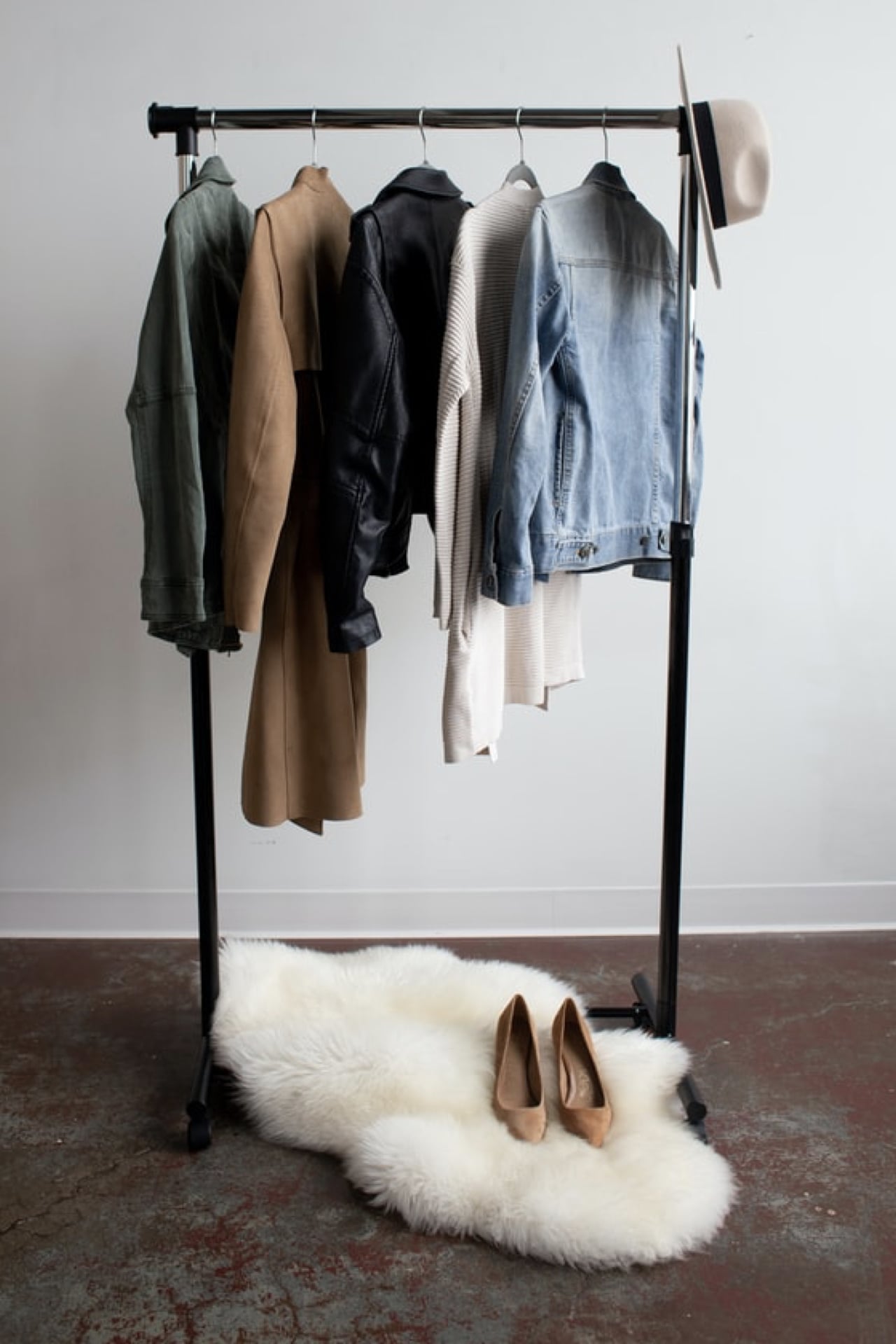
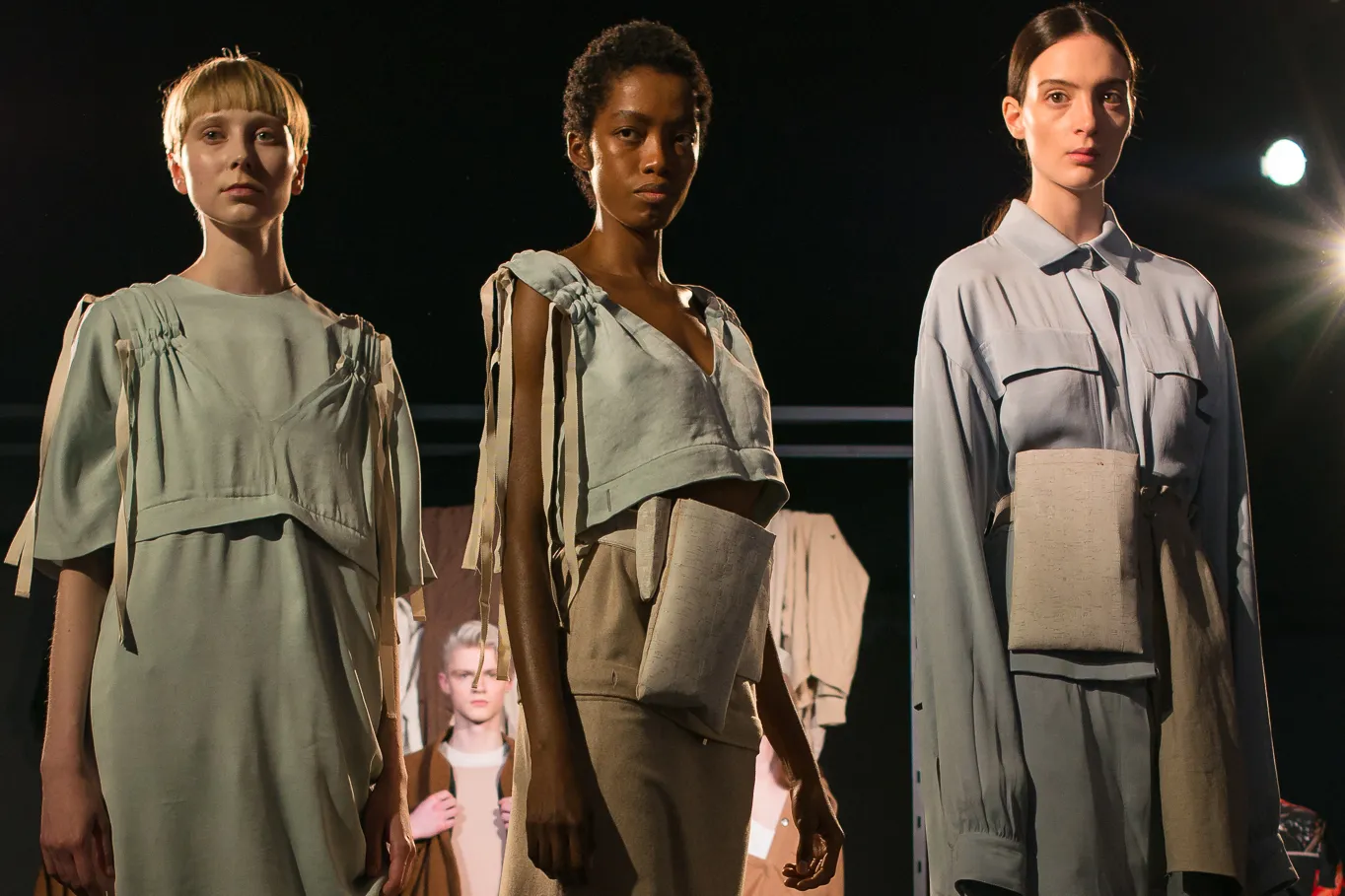 **Image 9:** Capsule wardrobe example illustrating coordinated minimal garments, retrieved from
**Image 10:** Modular sustainable fashion designs by Flavia La Rocca, retrieved from
# 7. Future Prospects
Modular fashion continues to evolve in response to technological innovation, material research, and changing consumer expectations. While modularity has historically appeared in decorative, military, and experimental contexts, its future development is increasingly linked to sustainability goals and digital transformation.
One area of growth lies in digital design and prototyping tools. Three-dimensional modelling software enables designers to simulate modular systems before physical production. Interfaces, attachment mechanisms, and component alignment can be tested virtually, reducing material waste during development. Digital environments also allow designers to visualise multiple configurations efficiently, improving precision and feasibility.
Advances in smart textiles and adaptive materials may further expand modular potential. Shape-memory fabrics, responsive materials, and engineered pleating systems introduce adaptability directly into textile structure. These innovations reduce reliance on mechanical components while maintaining flexibility.
Another promising direction is mass customization (Rinaldi, 2019). Digital platforms can allow consumers to select modules according to preference, body type, or functional need. When combined with on-demand production, this approach may reduce overproduction and inventory surplus.
Artificial intelligence and data analytics may also support modular systems by identifying which components are most frequently replaced or reconfigured. Such insights can inform design improvements and inventory planning, increasing system efficiency.
However, the future of modular fashion depends on balance. Technological advancement must not increase complexity to the point of reducing usability. Innovation should strengthen durability, accessibility, and adaptability rather than introduce unnecessary novelty.
If modularity is integrated carefully into design education, production systems, and consumer culture, it has the potential to move from niche experimentation toward broader industrial relevance.
# Key Takeaways
- Modularity transforms garments into adaptable systems rather than fixed objects.
- Historical examples show modularity has long existed for functional and symbolic reasons.
- Modular design aligns with sustainability by extending product life during use.
- Product–Service Systems (PSS) can support module replacement and upgrade models.
- Technical precision in fastening systems and interfaces is essential.
- Consumer understanding and usability determine success.
- High costs and production complexity remain barriers to diffusion.
- Modularity can symbolise environmental awareness in contemporary culture.
- Digital tools and smart materials expand future modular possibilities.
- Modularity must prioritise durability over novelty to remain sustainable.
# Summary
Modular fashion redefines clothing as a configurable system capable of evolving over time. By enabling replacement, adaptation, and transformation during the use phase, modular design offers an alternative to rapid replacement cycles. Its effectiveness depends on technical precision, aesthetic coherence, consumer understanding, and responsible implementation. When integrated thoughtfully into production systems and cultural practices, modularity can contribute to extending garment life and reducing material waste while preserving creative expression.
#
# References
Arte a Palazzo. (n.d.). *La moda nel XVI secolo: 1500–1550*. Retrieved February 17, 2026, from [https://www.arteapalazzo.it/moda/la-moda-nel-xvi-secolo-1500-1550/](https://www.arteapalazzo.it/moda/la-moda-nel-xvi-secolo-1500-1550/?utm_source=chatgpt.com)
bit schulungscenter. (n.d.). *Unità 3: Il ciclo di vita dei tessuti* \[PDF\]. *WEAR(E)ABLE – Best dressed sustainably*. Retrieved February 17, 2026, from [https://www.weareable-fashion.eu/wp-content/uploads/2022/02/Unita-didattica-3\_Il-ciclo-di-vita-dei-tessili.pdf](https://www.weareable-fashion.eu/wp-content/uploads/2022/02/Unita-didattica-3_Il-ciclo-di-vita-dei-tessili.pdf?utm_source=chatgpt.com)
Blum, P. (2021). *Circular fashion: Making the fashion industry sustainable*. Laurence King Publishing.
Casciani, D. (2023). Fashion and modular design – Modularity as a design strategy for sustainability. *AGATHÓN \| International Journal of Architecture, Art and Design, 14*, 326–337. https://doi.org/10.19229/2464-9309/14282023
Chapman, J. (2005). *Emotionally durable design: Objects, experiences and empathy.* Earthscan.
DRESSX. (n.d.). *Walk Me Out* \[Product page\]. Retrieved February 17, 2026, from
Gilardi, G. (n.d.). *Cos’è un capsule wardrobe e come crearne uno*. Retrieved February 17, 2026, from [https://giuliagilardi.com/cose-un-capsule-wardrobe-e-come-crearne-uno/](https://giuliagilardi.com/cose-un-capsule-wardrobe-e-come-crearne-uno/?utm_source=chatgpt.com)
Il Vestito Verde. (n.d.). *Moda digitale: La nuova era della moda sostenibile*. Retrieved February 17, 2026, from [https://www.ilvestitoverde.com/moda-digitale-la-nuova-era-della-moda-sostenibile/](https://www.ilvestitoverde.com/moda-digitale-la-nuova-era-della-moda-sostenibile/?utm_source=chatgpt.com)
Kornit Digital. (2023, May 24). *Turning things around: How modular fashion and home décor boost sustainability*. Retrieved February 17, 2026, from [https://www.kornit.com/magazine/turning-things-around-how-modular-fashion-and-home-decor-boost-sustainability/](https://www.kornit.com/magazine/turning-things-around-how-modular-fashion-and-home-decor-boost-sustainability/?utm_source=chatgpt.com)
L’Officiel Italia. (2020, June 18). *5 minuti di storia della moda insieme a Issey Miyake*. [https://www.lofficielitalia.com/fashion/issey-miyake-storia-del-brand-designer-giapponese](https://www.lofficielitalia.com/fashion/issey-miyake-storia-del-brand-designer-giapponese?utm_source=chatgpt.com)
Manteco. (n.d.). *What is modular fashion: Circular design in a linear industry*. Retrieved February 17, 2026, from [https://manteco.com/what-is-modular-fashion-circular-design-in-a-linear-industry/](https://manteco.com/what-is-modular-fashion-circular-design-in-a-linear-industry/?utm_source=chatgpt.com)
Mia Fondazione ITS. (n.d.). *Innovazione digitale nella moda: Un cambiamento radicale*. Retrieved February 17, 2026, from [https://www.miafondazioneits.it/innovazione-digitale-nella-moda-un-cambiamento-radicale/](https://www.miafondazioneits.it/innovazione-digitale-nella-moda-un-cambiamento-radicale/?utm_source=chatgpt.com)
Offwrld Techwear. (n.d.). *Modular clothing* \[Blog post\]. Retrieved February 17, 2026, from [https://www.offwrld-techwear.com/blogs/techwear-blog/modular-clothing](https://www.offwrld-techwear.com/blogs/techwear-blog/modular-clothing?utm_source=chatgpt.com)
Prime Fit Uniforms. (2025). *The definitive guide to military uniforms: History, types, & procurement best practices*. [https://primefituniforms.com/military-uniform](https://primefituniforms.com/military-uniform?utm_source=chatgpt.com)
Qualtrics. (n.d.). *Ciclo di vita del prodotto (Product lifecycle): Definizione e fasi* (IT). Retrieved February 17, 2026, from [https://www.qualtrics.com/it/experience-management/prodotto/ciclo-di-vita-del-prodotto/](https://www.qualtrics.com/it/experience-management/prodotto/ciclo-di-vita-del-prodotto/?utm_source=chatgpt.com)
Read the f\*cking manual. (n.d.). *Dieter Rams e i 10 principi del buon design*. Retrieved February 17, 2026, from [https://readthefmanual.it/dieter-rams-e-i-10-principi-de-buon-design/](https://readthefmanual.it/dieter-rams-e-i-10-principi-de-buon-design/?utm_source=chatgpt.com)
Redress Design Award. (n.d.). *Design for longevity*. Retrieved February 17, 2026, from [https://www.redressdesignaward.com/academy/resources/guide/design-for-longevity](https://www.redressdesignaward.com/academy/resources/guide/design-for-longevity?utm_source=chatgpt.com)
Rinaldi, F. (2019). *Fashion industry 2030: Reshaping the future through sustainability and responsible innovation*. Bocconi University Press.
Slimstock. (n.d.). *Cos’è il passaporto digitale dei prodotti (DPP)*. Retrieved February 17, 2026, from
Sustainability Directory. (n.d.). *Adaptive fashion market → Term*. Retrieved February 17, 2026, from [https://fashion.sustainability-directory.com/term/adaptive-fashion-market/](https://fashion.sustainability-directory.com/term/adaptive-fashion-market/?utm_source=chatgpt.com)
Transitions Project. (n.d.). *Design for disassembly*. Retrieved February 17, 2026, from [https://transitionsproject.eu/sustainability/design-for-disassembly/](https://transitionsproject.eu/sustainability/design-for-disassembly/?utm_source=chatgpt.com)
Zhang, X., Le Normand, A., Yan, S., Wood, J., & Henninger, C. E. (2024). What is modular fashion: Towards a common definition. *Resources, Conservation and Recycling, 204*, 107495. https://doi.org/10.1016/j.resconrec.2024.107495
---
## Toolkit
# Introduction to the Toolkit: translating theory into practice
**Purpose**
The following toolkit has been created with the aim of linking the conceptual understanding of modularity to practical design methods in the world of fashion.
It is a tool that helps transform theoretical ideas into design practices, with the aim of supporting designers and students in exploring and applying modular thinking in the creation of garments and collections, promoting more sustainable design that can adapt to different needs.
**Learning outcomes**
By the end of this toolkit, students will be able to:
1. Identify modular opportunities within existing garments or new designs.
2. Apply design to the principles of modularity (standardisation, interchangeability, adaptability).
3. Prototype modular garments using low-tech or digital tools.
4. Reflect on how modular systems support circularity and sustainability.
**Brief summary of key concepts**
- **Modularity**: design with interchangeable parts that can be recombined.
- **Circularity**: keeping materials and products in continuous use.
- **Product lifespan**: extending the time garments remain useful and desirable.
- **Design for disassembly**: creating garments that can be easily disassembled and reassembled.
# Phase 1: Understanding modularity in the design process
**Analyse your design system**
- Are my garments disposable or part of a system?
- Can elements (collars, sleeves, linings, panels) be exchanged or replaced?
- Could different pieces share patterns or fastenings?
**Objective**: to help designers verify the modular potential of current garments or collections.
**Tip**: use colour coding (green/yellow/red) for quick visual scoring (green = strong modular potential).
| | | | |
|---------------------------------|------------------------------------------------------------|--------------------|----------------------------------|
| **Area** | **Questions to ask** | **Current Status** | **Opportunities for Modularity** |
| Garment construction | Do the pieces share components or construction logic? | | |
| Use of materials | Are fabrics or finishes consistent across all garments? | | |
| Closure systems and connectors. | Are the fastenings standardised or interchangeable? | | |
| Aesthetics | Does the collection have a unified visual language? | | |
| Life cycle | Is it possible to repair, replace or update certain parts? | | |
**Identify opportunities for modularity**
- Within a single garment: analyse each item to identify detachable or interchangeable parts (such as sleeves, collars, pockets)
- Within a collection: design garments that share components, materials or fastening systems (such as buttons, zips or magnetic fastenings), so that the elements can be combined with each other
- Within the user's wardrobe: think of a system of garments that are compatible with each other and can be mixed and matched.
**Objective**: to provide a quick self-assessment before prototyping or redesigning.
**Tip**: review this checklist after each design iteration to monitor improvement.
| | | | |
|------------------------------------------------------|---------|--------|-----------|
| **Checklist Items** | **Yes** | **No** | **Notes** |
| The garment has detachable or upgradeable elements. | | | |
| The components share standard connection systems. | | | |
| The modules maintain their structure when separated. | | | |
| The user can reassemble without tools. | | | |
| The fabric supports repeated use. | | | |
| The design remains consistent in all combinations. | | | |
| Modules can be repaired or replaced individually. | | | |
**Checklist: 'Is my design modular?'**
- Detachable or upgradeable components
Standardised fastening systems or seams
Structural integrity maintained when separated
Intuitive reassembly process
Visual consistency between combinations
# Phase 2: Application of fundamental design principles
**Principle 1: Interchangeable parts**
Design garments as modular units: elements such as tops, skirts, sleeves or accessories that can be combined in different ways. Consider using shared patterns across multiple designs to create a consistent design platform.
Example: a single bodice designed to fit three different skirt modules, offering multiple style variations from a common base.
**Objective**: To translate theoretical principles into direct, usable design strategies.
**Tip**: Encourage students to highlight one principle for each design sketch and note how it is applied.
| | | |
|----------------------------|-------------------------------------------------------------------------|-------------------------------------------------------|
| **Principle** | **Application technique** | **Examples** |
| Interchangeable parts | Divide designs into modules (bodice, sleeve, skirt). Standardise edges. | Two-piece dress that converts into a jumpsuit. |
| Standardised interfaces | Use uniform zips/buttons on all garments. | Shared zip systems between the upper and lower parts. |
| Adaptability and longevity | Adjustable laces, panels, elastic inserts. | The garment adapts to multiple body types. |
| Design for disassembly | Replace seams with detachable joints. | Visible zips or press studs. |
| Aesthetic integration | Maintain visual unity between parts. | Consistent colour palette or geometric logic. |
**Principle 2: Standardisation of interfaces**
Choose standardised connection systems, consistent fastener sizes and positioning for all modules. You could use visible fasteners as decorative design elements, transforming functionality into aesthetics.
**Objective**: to support material decision-making in the early stages of design.
**Tip**: Create small test samples of fasteners in the studio to test behaviour before committing to full prototypes.
| | | |
|------------------------|--------------------------------|---------------------------------------------------|
| **Material type** | **Best fastening options** | **Design Notes** |
| Cotton, twill | Buttons, press studs, zips | Reinforce the seam areas. |
| Stretch mesh | Magnets, laces | Avoid heavy zips. |
| Lightweight synthetics | Buttons, Velcro | Use recycled polyester |
| Technical fabrics | Waterproof zips, modular clips | Excellent for the modularity of outdoor clothing. |
# Phase 3: Material and technical considerations
**Choice of materials**
Choose durable, medium-weight fabrics that can maintain the shape and structure of the garment, such as cotton twill, organic denim or recycled polyester blends. Avoid materials that are too delicate or prone to fraying, as these will hinder the reassembly of modules. Explore innovative materials, such as recycled or regenerated fibres and single-material fabrics, which facilitate recycling.
**Objective**: to help designers evaluate fabrics not only for aesthetics but also for system compatibility.
**Tip**: Combine this with supplier research; students can list which factories or suppliers meet these criteria.
| | | |
|--------------------|-------------------------------------------|-----------------------------------|
| **Criterion** | **Why it matters** | **Examples** |
| Durability | Withstands repeated assembly/disassembly. | Organic twill, recycled nylon. |
| Consistency | Ensures compatibility between modules. | Uniform weight and drape. |
| Circularity | Simplifies recycling. | Single-material fabrics, Tencel™. |
| Local availability | Reduces environmental footprint. | Italian regenerated fabrics. |
**Construction methods**
Use modular seams or zip joints to allow parts to be removed and replaced without compromising the structure of the garment. Reinforce edges in areas subject to stress or movement. Design patterns consistently, keeping seam lengths and grain lines uniform to ensure that modules can be combined and reassembled.
**Test durability**
Test the strength of modular garments through repeated attachment and detachment tests, observing stress points around fastenings to identify any structural weaknesses or signs of wear. Use feedback from user experience to make targeted improvements.
**Objective**: encourage evidence-based assessment rather than assumptions about durability.
**Tip**: use a smartphone to film stress tests, which is useful for visual comparison between iterations.
| | | |
|------------------|-----------------------------------------------------|-------------|
| **Type of test** | **Goal** | **Results** |
| Attachment test | Check the fastening's hold after 50+ uses. | |
| Stress test | Observe the distortion of the fabric at the joints. | |
| Washing test | Ensure consistency of fit after washing. | |
| User test | Check for intuitive assembly. | |
| Aesthetic test | Maintain visual consistency. | |
# Phase 4: Design and prototyping of the modular garment
**Concept development and prototyping**
Design a system consisting of 3-5 modules (e.g. a top panel, a sleeve, a skirt and an extension). Develop the concept using digital tools such as CLO3D or Illustrator, or paper prototypes to visualise the connections between the parts.
Then create a base garment and two interchangeable modules, testing different combinations to evaluate their aesthetic harmony and structural functionality.
**Objective**: to guide designers through a structured process from conception to functional prototype.
**Tip**: Photograph or film each stage to create a modular development log.
| | | | |
|-----------|----------------------------------|-----------------------|----------------------|
| **Stage** | **Activities** | **Tools/Materials** | **Product** |
| 1 | Concept sketch (3–5 modules). | Sketchpad/CAD. | Connection diagram. |
| 2 | Draft standardised models. | Pattern paper/ CLO3D. | Form templates. |
| 3 | Select materials and fastenings. | Fabric samples. | Compatibility sheet. |
| 4 | Build a prototype. | Sewing tools. | Work samples. |
| 5 | Test usability and aesthetics. | Mannequin/model. | Evaluation notes. |
**Assess functionality**
- How many different combinations can be created with the available modules?
- Is the assembly process clear and intuitive?
- Does the garment maintain structural stability and comfort during use?
- To what extent can this approach help reduce resource consumption over time?
**Objective**: to provide a structured or peer self-assessment after prototyping.
**Tip**: use this rubric in small peer review groups, as feedback often reveals overlooked usability issues.
| | | |
|-------------------------|---------------------------------------------------------|-----------------|
| **Criterion** | **Indicators of success** | **Score (1–5)** |
| Interchangeability | Modules connect correctly | |
| Aesthetic consistency | Unified look in all combinations. | |
| Ease of use | Intuitive closures. | |
| Durability | Components withstand repeated use. | |
| Material sustainability | Fabrics meet circular objectives | |
| Creativity | Combinations expand the user's expressive possibilities | |
# Practical activity: 'Modular Wardrobe Remix Challenge'
**Activity overview**
**Objective**: to apply modular thinking by transforming existing garments into a functional modular system.
**Time**: 3-4 hours (studio or classroom activity).
**Materials**: 2-3 old garments (shirts, skirts, dresses, etc.), scissors, seam ripper, sewing kit, basic fasteners (buttons, zips, Velcro, etc.).
**Step-by-step activity**
1. Select garments with similar materials or silhouettes.
2. Take them apart: separate sleeves, collars, bodices, panels.
3. Design the modules: draw how you could reconnect the parts to obtain more combinations.
4. Create new connections: add standard fasteners (zippers, buttons, Velcro) to allow the parts to be assembled and separated.
5. Test combinations: how many looks can you achieve?
6. Reflect and document: draw, photograph or digitally render your modular system.
**Food for thought**
- How has disassembly and reconstruction changed your view of the value of clothing?
- How many variations did you achieve from a single set of parts?
- Which fastenings or fabrics worked best?
- How could digital design tools improve this process?
---
## Case Study
# 1. Introduction: Brand Overview and Relevance of Modularity
Flavia La Rocca, a Roman designer who founded her own brand in 2013, is one of the most significant figures in contemporary sustainable fashion. From the outset, she has stood out for her innovative approach and her 'one garment, many lives' philosophy, based on the creation of modular garments that can be transformed and adapted using hidden zip systems. In 2019, she received the Green Carpet Fashion Award for Best Emerging Designer, a recognition that celebrates her ability to combine innovation, aesthetics and sustainability. The award-winning dress, which can be worn in over forty variations, embodies her vision of responsible fashion, as the versatility of the design reduces the use of water, raw materials and energy, contributing to a decrease in CO₂ emissions. A year later, in March 2020, she became the first designer to appear on the cover of National Geographic dedicated to eco-design, with a dress made from recycled fibre derived from textile waste.
Flavia La Rocca's work is based on three pillars: modularity, sustainability and production ethics, and represents a perfect balance between Italian craftsmanship and technological innovation. Each creation is 100% made in Italy, using certified, recycled or natural materials, through transparent and traceable processes that aim to reduce resource consumption and minimise environmental impact.
Her research integrates the key principles of circular fashion: design for disassembly, emotional durability, reuse of materials and product longevity.
**Image 9:** Capsule wardrobe example illustrating coordinated minimal garments, retrieved from
**Image 10:** Modular sustainable fashion designs by Flavia La Rocca, retrieved from
# 7. Future Prospects
Modular fashion continues to evolve in response to technological innovation, material research, and changing consumer expectations. While modularity has historically appeared in decorative, military, and experimental contexts, its future development is increasingly linked to sustainability goals and digital transformation.
One area of growth lies in digital design and prototyping tools. Three-dimensional modelling software enables designers to simulate modular systems before physical production. Interfaces, attachment mechanisms, and component alignment can be tested virtually, reducing material waste during development. Digital environments also allow designers to visualise multiple configurations efficiently, improving precision and feasibility.
Advances in smart textiles and adaptive materials may further expand modular potential. Shape-memory fabrics, responsive materials, and engineered pleating systems introduce adaptability directly into textile structure. These innovations reduce reliance on mechanical components while maintaining flexibility.
Another promising direction is mass customization (Rinaldi, 2019). Digital platforms can allow consumers to select modules according to preference, body type, or functional need. When combined with on-demand production, this approach may reduce overproduction and inventory surplus.
Artificial intelligence and data analytics may also support modular systems by identifying which components are most frequently replaced or reconfigured. Such insights can inform design improvements and inventory planning, increasing system efficiency.
However, the future of modular fashion depends on balance. Technological advancement must not increase complexity to the point of reducing usability. Innovation should strengthen durability, accessibility, and adaptability rather than introduce unnecessary novelty.
If modularity is integrated carefully into design education, production systems, and consumer culture, it has the potential to move from niche experimentation toward broader industrial relevance.
# Key Takeaways
- Modularity transforms garments into adaptable systems rather than fixed objects.
- Historical examples show modularity has long existed for functional and symbolic reasons.
- Modular design aligns with sustainability by extending product life during use.
- Product–Service Systems (PSS) can support module replacement and upgrade models.
- Technical precision in fastening systems and interfaces is essential.
- Consumer understanding and usability determine success.
- High costs and production complexity remain barriers to diffusion.
- Modularity can symbolise environmental awareness in contemporary culture.
- Digital tools and smart materials expand future modular possibilities.
- Modularity must prioritise durability over novelty to remain sustainable.
# Summary
Modular fashion redefines clothing as a configurable system capable of evolving over time. By enabling replacement, adaptation, and transformation during the use phase, modular design offers an alternative to rapid replacement cycles. Its effectiveness depends on technical precision, aesthetic coherence, consumer understanding, and responsible implementation. When integrated thoughtfully into production systems and cultural practices, modularity can contribute to extending garment life and reducing material waste while preserving creative expression.
#
# References
Arte a Palazzo. (n.d.). *La moda nel XVI secolo: 1500–1550*. Retrieved February 17, 2026, from [https://www.arteapalazzo.it/moda/la-moda-nel-xvi-secolo-1500-1550/](https://www.arteapalazzo.it/moda/la-moda-nel-xvi-secolo-1500-1550/?utm_source=chatgpt.com)
bit schulungscenter. (n.d.). *Unità 3: Il ciclo di vita dei tessuti* \[PDF\]. *WEAR(E)ABLE – Best dressed sustainably*. Retrieved February 17, 2026, from [https://www.weareable-fashion.eu/wp-content/uploads/2022/02/Unita-didattica-3\_Il-ciclo-di-vita-dei-tessili.pdf](https://www.weareable-fashion.eu/wp-content/uploads/2022/02/Unita-didattica-3_Il-ciclo-di-vita-dei-tessili.pdf?utm_source=chatgpt.com)
Blum, P. (2021). *Circular fashion: Making the fashion industry sustainable*. Laurence King Publishing.
Casciani, D. (2023). Fashion and modular design – Modularity as a design strategy for sustainability. *AGATHÓN \| International Journal of Architecture, Art and Design, 14*, 326–337. https://doi.org/10.19229/2464-9309/14282023
Chapman, J. (2005). *Emotionally durable design: Objects, experiences and empathy.* Earthscan.
DRESSX. (n.d.). *Walk Me Out* \[Product page\]. Retrieved February 17, 2026, from
Gilardi, G. (n.d.). *Cos’è un capsule wardrobe e come crearne uno*. Retrieved February 17, 2026, from [https://giuliagilardi.com/cose-un-capsule-wardrobe-e-come-crearne-uno/](https://giuliagilardi.com/cose-un-capsule-wardrobe-e-come-crearne-uno/?utm_source=chatgpt.com)
Il Vestito Verde. (n.d.). *Moda digitale: La nuova era della moda sostenibile*. Retrieved February 17, 2026, from [https://www.ilvestitoverde.com/moda-digitale-la-nuova-era-della-moda-sostenibile/](https://www.ilvestitoverde.com/moda-digitale-la-nuova-era-della-moda-sostenibile/?utm_source=chatgpt.com)
Kornit Digital. (2023, May 24). *Turning things around: How modular fashion and home décor boost sustainability*. Retrieved February 17, 2026, from [https://www.kornit.com/magazine/turning-things-around-how-modular-fashion-and-home-decor-boost-sustainability/](https://www.kornit.com/magazine/turning-things-around-how-modular-fashion-and-home-decor-boost-sustainability/?utm_source=chatgpt.com)
L’Officiel Italia. (2020, June 18). *5 minuti di storia della moda insieme a Issey Miyake*. [https://www.lofficielitalia.com/fashion/issey-miyake-storia-del-brand-designer-giapponese](https://www.lofficielitalia.com/fashion/issey-miyake-storia-del-brand-designer-giapponese?utm_source=chatgpt.com)
Manteco. (n.d.). *What is modular fashion: Circular design in a linear industry*. Retrieved February 17, 2026, from [https://manteco.com/what-is-modular-fashion-circular-design-in-a-linear-industry/](https://manteco.com/what-is-modular-fashion-circular-design-in-a-linear-industry/?utm_source=chatgpt.com)
Mia Fondazione ITS. (n.d.). *Innovazione digitale nella moda: Un cambiamento radicale*. Retrieved February 17, 2026, from [https://www.miafondazioneits.it/innovazione-digitale-nella-moda-un-cambiamento-radicale/](https://www.miafondazioneits.it/innovazione-digitale-nella-moda-un-cambiamento-radicale/?utm_source=chatgpt.com)
Offwrld Techwear. (n.d.). *Modular clothing* \[Blog post\]. Retrieved February 17, 2026, from [https://www.offwrld-techwear.com/blogs/techwear-blog/modular-clothing](https://www.offwrld-techwear.com/blogs/techwear-blog/modular-clothing?utm_source=chatgpt.com)
Prime Fit Uniforms. (2025). *The definitive guide to military uniforms: History, types, & procurement best practices*. [https://primefituniforms.com/military-uniform](https://primefituniforms.com/military-uniform?utm_source=chatgpt.com)
Qualtrics. (n.d.). *Ciclo di vita del prodotto (Product lifecycle): Definizione e fasi* (IT). Retrieved February 17, 2026, from [https://www.qualtrics.com/it/experience-management/prodotto/ciclo-di-vita-del-prodotto/](https://www.qualtrics.com/it/experience-management/prodotto/ciclo-di-vita-del-prodotto/?utm_source=chatgpt.com)
Read the f\*cking manual. (n.d.). *Dieter Rams e i 10 principi del buon design*. Retrieved February 17, 2026, from [https://readthefmanual.it/dieter-rams-e-i-10-principi-de-buon-design/](https://readthefmanual.it/dieter-rams-e-i-10-principi-de-buon-design/?utm_source=chatgpt.com)
Redress Design Award. (n.d.). *Design for longevity*. Retrieved February 17, 2026, from [https://www.redressdesignaward.com/academy/resources/guide/design-for-longevity](https://www.redressdesignaward.com/academy/resources/guide/design-for-longevity?utm_source=chatgpt.com)
Rinaldi, F. (2019). *Fashion industry 2030: Reshaping the future through sustainability and responsible innovation*. Bocconi University Press.
Slimstock. (n.d.). *Cos’è il passaporto digitale dei prodotti (DPP)*. Retrieved February 17, 2026, from
Sustainability Directory. (n.d.). *Adaptive fashion market → Term*. Retrieved February 17, 2026, from [https://fashion.sustainability-directory.com/term/adaptive-fashion-market/](https://fashion.sustainability-directory.com/term/adaptive-fashion-market/?utm_source=chatgpt.com)
Transitions Project. (n.d.). *Design for disassembly*. Retrieved February 17, 2026, from [https://transitionsproject.eu/sustainability/design-for-disassembly/](https://transitionsproject.eu/sustainability/design-for-disassembly/?utm_source=chatgpt.com)
Zhang, X., Le Normand, A., Yan, S., Wood, J., & Henninger, C. E. (2024). What is modular fashion: Towards a common definition. *Resources, Conservation and Recycling, 204*, 107495. https://doi.org/10.1016/j.resconrec.2024.107495
---
## Toolkit
# Introduction to the Toolkit: translating theory into practice
**Purpose**
The following toolkit has been created with the aim of linking the conceptual understanding of modularity to practical design methods in the world of fashion.
It is a tool that helps transform theoretical ideas into design practices, with the aim of supporting designers and students in exploring and applying modular thinking in the creation of garments and collections, promoting more sustainable design that can adapt to different needs.
**Learning outcomes**
By the end of this toolkit, students will be able to:
1. Identify modular opportunities within existing garments or new designs.
2. Apply design to the principles of modularity (standardisation, interchangeability, adaptability).
3. Prototype modular garments using low-tech or digital tools.
4. Reflect on how modular systems support circularity and sustainability.
**Brief summary of key concepts**
- **Modularity**: design with interchangeable parts that can be recombined.
- **Circularity**: keeping materials and products in continuous use.
- **Product lifespan**: extending the time garments remain useful and desirable.
- **Design for disassembly**: creating garments that can be easily disassembled and reassembled.
# Phase 1: Understanding modularity in the design process
**Analyse your design system**
- Are my garments disposable or part of a system?
- Can elements (collars, sleeves, linings, panels) be exchanged or replaced?
- Could different pieces share patterns or fastenings?
**Objective**: to help designers verify the modular potential of current garments or collections.
**Tip**: use colour coding (green/yellow/red) for quick visual scoring (green = strong modular potential).
| | | | |
|---------------------------------|------------------------------------------------------------|--------------------|----------------------------------|
| **Area** | **Questions to ask** | **Current Status** | **Opportunities for Modularity** |
| Garment construction | Do the pieces share components or construction logic? | | |
| Use of materials | Are fabrics or finishes consistent across all garments? | | |
| Closure systems and connectors. | Are the fastenings standardised or interchangeable? | | |
| Aesthetics | Does the collection have a unified visual language? | | |
| Life cycle | Is it possible to repair, replace or update certain parts? | | |
**Identify opportunities for modularity**
- Within a single garment: analyse each item to identify detachable or interchangeable parts (such as sleeves, collars, pockets)
- Within a collection: design garments that share components, materials or fastening systems (such as buttons, zips or magnetic fastenings), so that the elements can be combined with each other
- Within the user's wardrobe: think of a system of garments that are compatible with each other and can be mixed and matched.
**Objective**: to provide a quick self-assessment before prototyping or redesigning.
**Tip**: review this checklist after each design iteration to monitor improvement.
| | | | |
|------------------------------------------------------|---------|--------|-----------|
| **Checklist Items** | **Yes** | **No** | **Notes** |
| The garment has detachable or upgradeable elements. | | | |
| The components share standard connection systems. | | | |
| The modules maintain their structure when separated. | | | |
| The user can reassemble without tools. | | | |
| The fabric supports repeated use. | | | |
| The design remains consistent in all combinations. | | | |
| Modules can be repaired or replaced individually. | | | |
**Checklist: 'Is my design modular?'**
- Detachable or upgradeable components
Standardised fastening systems or seams
Structural integrity maintained when separated
Intuitive reassembly process
Visual consistency between combinations
# Phase 2: Application of fundamental design principles
**Principle 1: Interchangeable parts**
Design garments as modular units: elements such as tops, skirts, sleeves or accessories that can be combined in different ways. Consider using shared patterns across multiple designs to create a consistent design platform.
Example: a single bodice designed to fit three different skirt modules, offering multiple style variations from a common base.
**Objective**: To translate theoretical principles into direct, usable design strategies.
**Tip**: Encourage students to highlight one principle for each design sketch and note how it is applied.
| | | |
|----------------------------|-------------------------------------------------------------------------|-------------------------------------------------------|
| **Principle** | **Application technique** | **Examples** |
| Interchangeable parts | Divide designs into modules (bodice, sleeve, skirt). Standardise edges. | Two-piece dress that converts into a jumpsuit. |
| Standardised interfaces | Use uniform zips/buttons on all garments. | Shared zip systems between the upper and lower parts. |
| Adaptability and longevity | Adjustable laces, panels, elastic inserts. | The garment adapts to multiple body types. |
| Design for disassembly | Replace seams with detachable joints. | Visible zips or press studs. |
| Aesthetic integration | Maintain visual unity between parts. | Consistent colour palette or geometric logic. |
**Principle 2: Standardisation of interfaces**
Choose standardised connection systems, consistent fastener sizes and positioning for all modules. You could use visible fasteners as decorative design elements, transforming functionality into aesthetics.
**Objective**: to support material decision-making in the early stages of design.
**Tip**: Create small test samples of fasteners in the studio to test behaviour before committing to full prototypes.
| | | |
|------------------------|--------------------------------|---------------------------------------------------|
| **Material type** | **Best fastening options** | **Design Notes** |
| Cotton, twill | Buttons, press studs, zips | Reinforce the seam areas. |
| Stretch mesh | Magnets, laces | Avoid heavy zips. |
| Lightweight synthetics | Buttons, Velcro | Use recycled polyester |
| Technical fabrics | Waterproof zips, modular clips | Excellent for the modularity of outdoor clothing. |
# Phase 3: Material and technical considerations
**Choice of materials**
Choose durable, medium-weight fabrics that can maintain the shape and structure of the garment, such as cotton twill, organic denim or recycled polyester blends. Avoid materials that are too delicate or prone to fraying, as these will hinder the reassembly of modules. Explore innovative materials, such as recycled or regenerated fibres and single-material fabrics, which facilitate recycling.
**Objective**: to help designers evaluate fabrics not only for aesthetics but also for system compatibility.
**Tip**: Combine this with supplier research; students can list which factories or suppliers meet these criteria.
| | | |
|--------------------|-------------------------------------------|-----------------------------------|
| **Criterion** | **Why it matters** | **Examples** |
| Durability | Withstands repeated assembly/disassembly. | Organic twill, recycled nylon. |
| Consistency | Ensures compatibility between modules. | Uniform weight and drape. |
| Circularity | Simplifies recycling. | Single-material fabrics, Tencel™. |
| Local availability | Reduces environmental footprint. | Italian regenerated fabrics. |
**Construction methods**
Use modular seams or zip joints to allow parts to be removed and replaced without compromising the structure of the garment. Reinforce edges in areas subject to stress or movement. Design patterns consistently, keeping seam lengths and grain lines uniform to ensure that modules can be combined and reassembled.
**Test durability**
Test the strength of modular garments through repeated attachment and detachment tests, observing stress points around fastenings to identify any structural weaknesses or signs of wear. Use feedback from user experience to make targeted improvements.
**Objective**: encourage evidence-based assessment rather than assumptions about durability.
**Tip**: use a smartphone to film stress tests, which is useful for visual comparison between iterations.
| | | |
|------------------|-----------------------------------------------------|-------------|
| **Type of test** | **Goal** | **Results** |
| Attachment test | Check the fastening's hold after 50+ uses. | |
| Stress test | Observe the distortion of the fabric at the joints. | |
| Washing test | Ensure consistency of fit after washing. | |
| User test | Check for intuitive assembly. | |
| Aesthetic test | Maintain visual consistency. | |
# Phase 4: Design and prototyping of the modular garment
**Concept development and prototyping**
Design a system consisting of 3-5 modules (e.g. a top panel, a sleeve, a skirt and an extension). Develop the concept using digital tools such as CLO3D or Illustrator, or paper prototypes to visualise the connections between the parts.
Then create a base garment and two interchangeable modules, testing different combinations to evaluate their aesthetic harmony and structural functionality.
**Objective**: to guide designers through a structured process from conception to functional prototype.
**Tip**: Photograph or film each stage to create a modular development log.
| | | | |
|-----------|----------------------------------|-----------------------|----------------------|
| **Stage** | **Activities** | **Tools/Materials** | **Product** |
| 1 | Concept sketch (3–5 modules). | Sketchpad/CAD. | Connection diagram. |
| 2 | Draft standardised models. | Pattern paper/ CLO3D. | Form templates. |
| 3 | Select materials and fastenings. | Fabric samples. | Compatibility sheet. |
| 4 | Build a prototype. | Sewing tools. | Work samples. |
| 5 | Test usability and aesthetics. | Mannequin/model. | Evaluation notes. |
**Assess functionality**
- How many different combinations can be created with the available modules?
- Is the assembly process clear and intuitive?
- Does the garment maintain structural stability and comfort during use?
- To what extent can this approach help reduce resource consumption over time?
**Objective**: to provide a structured or peer self-assessment after prototyping.
**Tip**: use this rubric in small peer review groups, as feedback often reveals overlooked usability issues.
| | | |
|-------------------------|---------------------------------------------------------|-----------------|
| **Criterion** | **Indicators of success** | **Score (1–5)** |
| Interchangeability | Modules connect correctly | |
| Aesthetic consistency | Unified look in all combinations. | |
| Ease of use | Intuitive closures. | |
| Durability | Components withstand repeated use. | |
| Material sustainability | Fabrics meet circular objectives | |
| Creativity | Combinations expand the user's expressive possibilities | |
# Practical activity: 'Modular Wardrobe Remix Challenge'
**Activity overview**
**Objective**: to apply modular thinking by transforming existing garments into a functional modular system.
**Time**: 3-4 hours (studio or classroom activity).
**Materials**: 2-3 old garments (shirts, skirts, dresses, etc.), scissors, seam ripper, sewing kit, basic fasteners (buttons, zips, Velcro, etc.).
**Step-by-step activity**
1. Select garments with similar materials or silhouettes.
2. Take them apart: separate sleeves, collars, bodices, panels.
3. Design the modules: draw how you could reconnect the parts to obtain more combinations.
4. Create new connections: add standard fasteners (zippers, buttons, Velcro) to allow the parts to be assembled and separated.
5. Test combinations: how many looks can you achieve?
6. Reflect and document: draw, photograph or digitally render your modular system.
**Food for thought**
- How has disassembly and reconstruction changed your view of the value of clothing?
- How many variations did you achieve from a single set of parts?
- Which fastenings or fabrics worked best?
- How could digital design tools improve this process?
---
## Case Study
# 1. Introduction: Brand Overview and Relevance of Modularity
Flavia La Rocca, a Roman designer who founded her own brand in 2013, is one of the most significant figures in contemporary sustainable fashion. From the outset, she has stood out for her innovative approach and her 'one garment, many lives' philosophy, based on the creation of modular garments that can be transformed and adapted using hidden zip systems. In 2019, she received the Green Carpet Fashion Award for Best Emerging Designer, a recognition that celebrates her ability to combine innovation, aesthetics and sustainability. The award-winning dress, which can be worn in over forty variations, embodies her vision of responsible fashion, as the versatility of the design reduces the use of water, raw materials and energy, contributing to a decrease in CO₂ emissions. A year later, in March 2020, she became the first designer to appear on the cover of National Geographic dedicated to eco-design, with a dress made from recycled fibre derived from textile waste.
Flavia La Rocca's work is based on three pillars: modularity, sustainability and production ethics, and represents a perfect balance between Italian craftsmanship and technological innovation. Each creation is 100% made in Italy, using certified, recycled or natural materials, through transparent and traceable processes that aim to reduce resource consumption and minimise environmental impact.
Her research integrates the key principles of circular fashion: design for disassembly, emotional durability, reuse of materials and product longevity.
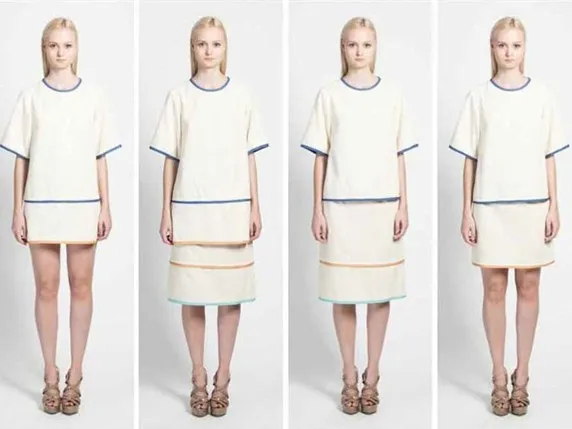 **Image 1:** Multiples ways to wear a modular Flavia La Rocca dress retrieved from
# 2. Design Philosophy and Modular System
## 2.1 Concept of Modularity
Each creation is conceived as a flexible system composed of interchangeable modules, such as tops, skirts, sleeves and detachable bodices, which can be disassembled and reassembled to create multiple outfits. The modules are joined together by zips or hidden fastenings, allowing interchangeability between collections and seasons and ensuring aesthetic and functional continuity over time.
The design is based on key principles:
- Interchangeability: the modules are designed with standardised sizes and fastening systems.
- Standardisation: each component follows consistent design patterns, ensuring compatibility between different garments.
- Design for disassembly: facilitates repair, recycling and recovery of materials at the end of their life.
- Emotional durability: the possibility of modifying and reinterpreting the modules strengthens the bond between the user and the garment.
## 2.2 User Interaction and Circular Behaviour
The brand adopts a Made To Order model, producing exclusively on demand and making each garment to measure. This choice is opposed to the 'see now, buy now' logic typical of fast fashion and aims to avoid overproduction and the accumulation of unsold items. Although it involves longer production times, this strategy fully reflects the brand's philosophy, which is oriented towards conscious slow fashion, prioritising quality and versatility over quantity. The goal is to create fewer garments but with more combination possibilities, promoting an essential, customisable and sustainable wardrobe that reduces waste and optimises the use of resources.
**Image 1:** Multiples ways to wear a modular Flavia La Rocca dress retrieved from
# 2. Design Philosophy and Modular System
## 2.1 Concept of Modularity
Each creation is conceived as a flexible system composed of interchangeable modules, such as tops, skirts, sleeves and detachable bodices, which can be disassembled and reassembled to create multiple outfits. The modules are joined together by zips or hidden fastenings, allowing interchangeability between collections and seasons and ensuring aesthetic and functional continuity over time.
The design is based on key principles:
- Interchangeability: the modules are designed with standardised sizes and fastening systems.
- Standardisation: each component follows consistent design patterns, ensuring compatibility between different garments.
- Design for disassembly: facilitates repair, recycling and recovery of materials at the end of their life.
- Emotional durability: the possibility of modifying and reinterpreting the modules strengthens the bond between the user and the garment.
## 2.2 User Interaction and Circular Behaviour
The brand adopts a Made To Order model, producing exclusively on demand and making each garment to measure. This choice is opposed to the 'see now, buy now' logic typical of fast fashion and aims to avoid overproduction and the accumulation of unsold items. Although it involves longer production times, this strategy fully reflects the brand's philosophy, which is oriented towards conscious slow fashion, prioritising quality and versatility over quantity. The goal is to create fewer garments but with more combination possibilities, promoting an essential, customisable and sustainable wardrobe that reduces waste and optimises the use of resources.
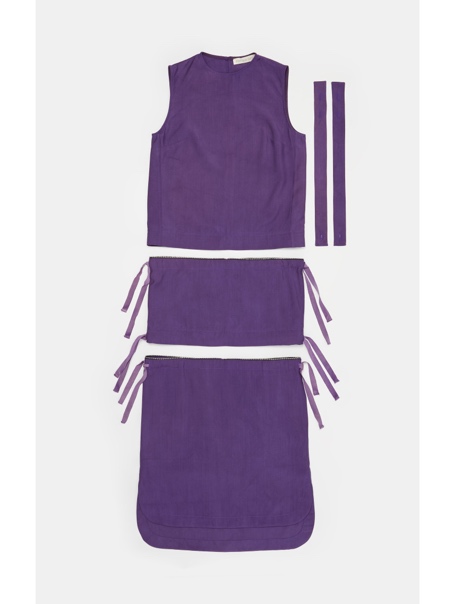 **Image 2:** Modular components of Flavia La Rocca’s “The Not Just a Dress Set” retrieved from [https://www.flavialarocca.com/](https://www.flavialarocca.com/)
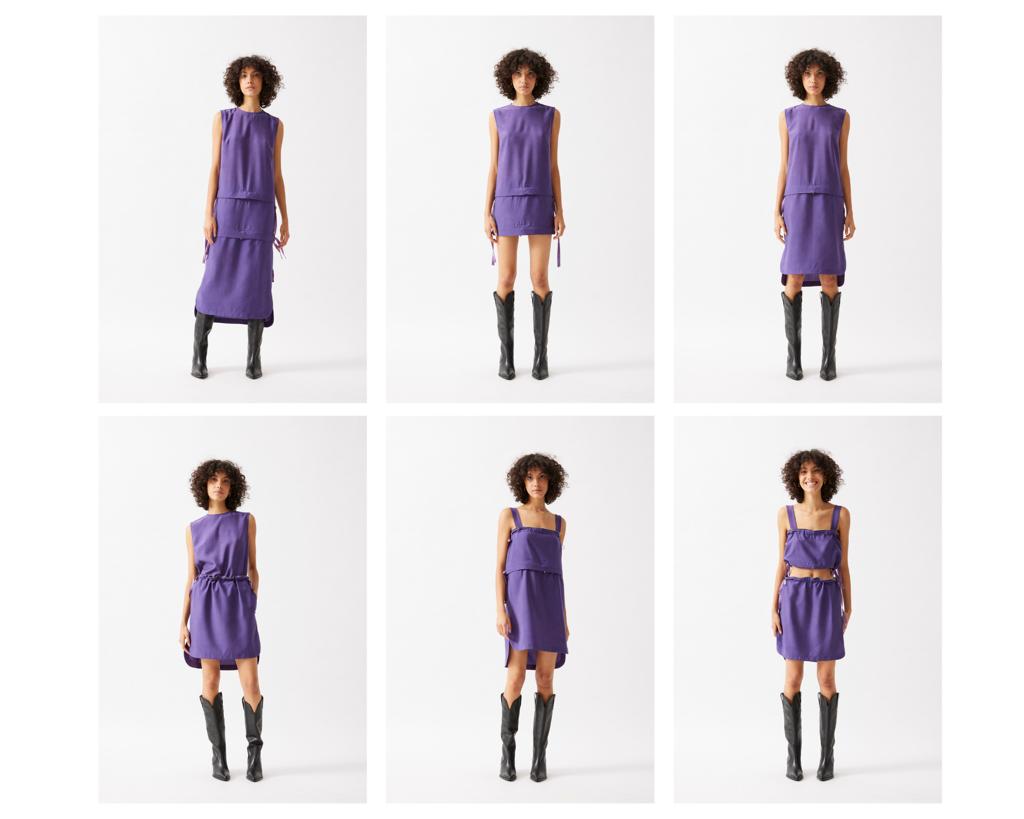 **Image 3:** Flavia La Rocca’s “The Not Just a Dress Set” worn six different ways retrieved from [https://wwd.com/fashion-news/fashion-scoops/flavia-la-rocca-launches-e-commerce-made-to-order-sustainable-1235397337/](https://wwd.com/fashion-news/fashion-scoops/flavia-la-rocca-launches-e-commerce-made-to-order-sustainable-1235397337/)
# 3. Innovative Use of Textile Materials
## 3.1 Sustainable and Innovative Fabrics
Use eco-sustainable certified materials:
- TENCEL™ LYOCELL: these fibres come from tree pulp, dissolved in a non-toxic organic solvent, using a closed-loop production process that reuses water and over 99% of the solvents. They are biodegradable and compostable in industrial, domestic, soil and marine conditions, so they can return completely to nature.
- TENCEL™ LUXE: The eco-botanical version of silk, derived from renewable wood sources.
- Zippers: All zippers are made of nickel-free brushed metal, certified to Oeko Tex Standard 100, with NewLife recycled polyester tape.
In collaboration with Phillacolor, the brand uses only natural dyes for dyeing fabrics, completely free of toxic substances, pesticides, nitrates or preservatives.
The technique used, known as cold dyeing, involves diluting the pigment in water, in which the fabric is immersed until it is completely absorbed. The material is then brushed to achieve an even distribution of colour, which is naturally fixed through oxidation in the air.
Another sustainable aspect of the process is the reusability of the dye baths: the residues can be used for subsequent dyeing, and as the pigment concentration decreases, they are regenerated or used to obtain more delicate shades.
**Image 3:** Flavia La Rocca’s “The Not Just a Dress Set” worn six different ways retrieved from [https://wwd.com/fashion-news/fashion-scoops/flavia-la-rocca-launches-e-commerce-made-to-order-sustainable-1235397337/](https://wwd.com/fashion-news/fashion-scoops/flavia-la-rocca-launches-e-commerce-made-to-order-sustainable-1235397337/)
# 3. Innovative Use of Textile Materials
## 3.1 Sustainable and Innovative Fabrics
Use eco-sustainable certified materials:
- TENCEL™ LYOCELL: these fibres come from tree pulp, dissolved in a non-toxic organic solvent, using a closed-loop production process that reuses water and over 99% of the solvents. They are biodegradable and compostable in industrial, domestic, soil and marine conditions, so they can return completely to nature.
- TENCEL™ LUXE: The eco-botanical version of silk, derived from renewable wood sources.
- Zippers: All zippers are made of nickel-free brushed metal, certified to Oeko Tex Standard 100, with NewLife recycled polyester tape.
In collaboration with Phillacolor, the brand uses only natural dyes for dyeing fabrics, completely free of toxic substances, pesticides, nitrates or preservatives.
The technique used, known as cold dyeing, involves diluting the pigment in water, in which the fabric is immersed until it is completely absorbed. The material is then brushed to achieve an even distribution of colour, which is naturally fixed through oxidation in the air.
Another sustainable aspect of the process is the reusability of the dye baths: the residues can be used for subsequent dyeing, and as the pigment concentration decreases, they are regenerated or used to obtain more delicate shades.
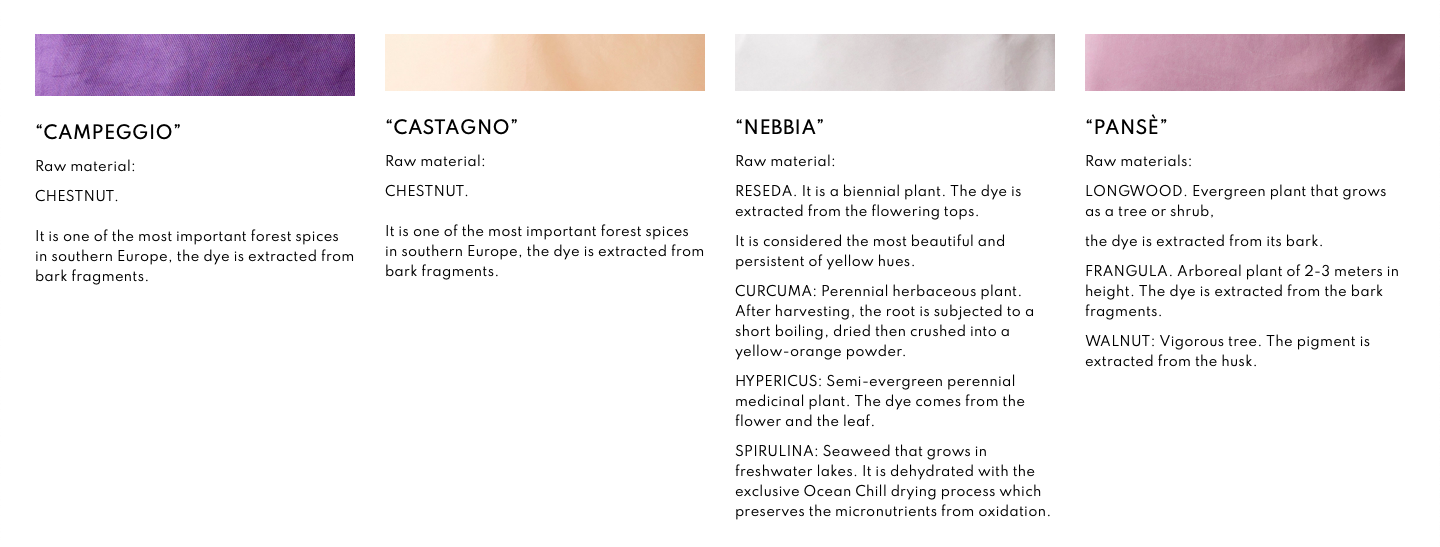 **Image 4:** Natural dyed textile colour samples retrieved from
## 3.2 Synergy between Material and Design
The quality and resistance of the fabrics used ensure that each module maintains its integrity even after numerous uses and transformations. The materials, while lightweight, offer high durability, making attachment and detachment easy and safe without compromising the structure of the garment. Furthermore, the consistency of the texture and aesthetics of the fabrics promotes harmonious integration between the various modules, ensuring visual continuity and stylistic uniformity in the overall design.
# 4. Impact, Challenges and Value as Good Practice
**Positive Impacts:**
- Environmental: extending the life cycle of garments, limiting waste and reducing the need for new resources, the multifunctionality of the modules allows for multiple uses of a single garment, decreasing the overall environmental impact of production.
- Social: promotes a more conscious approach to fashion, encouraging consumers to be more aware of the value of reuse, repair and durability.
- Economic: it reduces overproduction, encouraging a more essential wardrobe, and promotes local supply chains and Italian craftsmanship.
**Challenges:**
- Production complexity: it requires advanced pattern-making skills and a high degree of precision in the cutting, assembly and adaptation of modules, making the processes more complex than traditional production.
- Market adoption: modularity is still perceived as an experimental or niche concept, which limits its large-scale diffusion.
- Communication: tools and information are needed to educate consumers on the use of modular garments.
# Summary of Good Practice
Modular design can be both an aesthetic innovation and a systemic change in the way fashion is conceived. La Rocca integrates circular materials and sustainable processes, demonstrating that it is possible to combine environmental responsibility and functionality.
At the same time, it serves as an educational model for new generations of designers, showing how creativity, ethics and durability can coexist harmoniously in a fashion system geared towards a more conscious future.
# References
Flavia La Rocca. (n.d.). *Flavia La Rocca*. [https://www.flavialarocca.com/](https://www.flavialarocca.com/?utm_source=chatgpt.com)
**Image 4:** Natural dyed textile colour samples retrieved from
## 3.2 Synergy between Material and Design
The quality and resistance of the fabrics used ensure that each module maintains its integrity even after numerous uses and transformations. The materials, while lightweight, offer high durability, making attachment and detachment easy and safe without compromising the structure of the garment. Furthermore, the consistency of the texture and aesthetics of the fabrics promotes harmonious integration between the various modules, ensuring visual continuity and stylistic uniformity in the overall design.
# 4. Impact, Challenges and Value as Good Practice
**Positive Impacts:**
- Environmental: extending the life cycle of garments, limiting waste and reducing the need for new resources, the multifunctionality of the modules allows for multiple uses of a single garment, decreasing the overall environmental impact of production.
- Social: promotes a more conscious approach to fashion, encouraging consumers to be more aware of the value of reuse, repair and durability.
- Economic: it reduces overproduction, encouraging a more essential wardrobe, and promotes local supply chains and Italian craftsmanship.
**Challenges:**
- Production complexity: it requires advanced pattern-making skills and a high degree of precision in the cutting, assembly and adaptation of modules, making the processes more complex than traditional production.
- Market adoption: modularity is still perceived as an experimental or niche concept, which limits its large-scale diffusion.
- Communication: tools and information are needed to educate consumers on the use of modular garments.
# Summary of Good Practice
Modular design can be both an aesthetic innovation and a systemic change in the way fashion is conceived. La Rocca integrates circular materials and sustainable processes, demonstrating that it is possible to combine environmental responsibility and functionality.
At the same time, it serves as an educational model for new generations of designers, showing how creativity, ethics and durability can coexist harmoniously in a fashion system geared towards a more conscious future.
# References
Flavia La Rocca. (n.d.). *Flavia La Rocca*. [https://www.flavialarocca.com/](https://www.flavialarocca.com/?utm_source=chatgpt.com)